Right vs Left Basal Ganglia Stroke: Symptoms, Differences and Recovery
Introduction
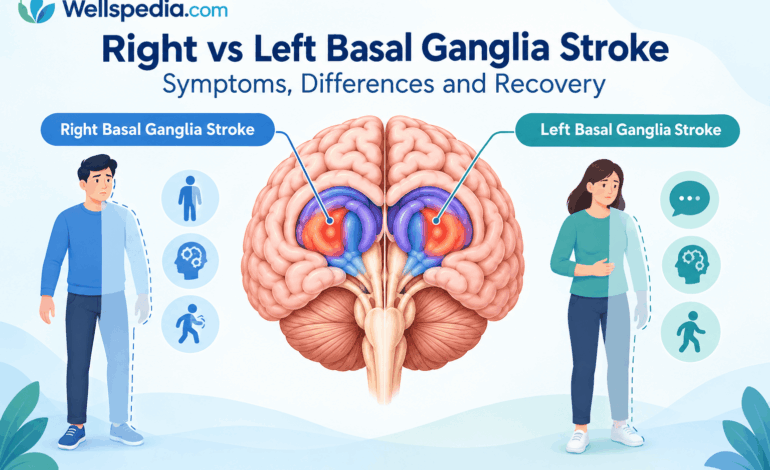
Basal ganglia stroke can affect movement, sensation, coordination, speech, and other neurological functions. The symptoms may differ depending on whether the stroke affects the right or left side of the brain. Understanding these differences can help explain why some people develop left-sided symptoms while others experience right-sided problems.
For a complete overview of the condition, including its types, symptoms, causes, treatment, and recovery, read our Basal Ganglia Stroke guide.
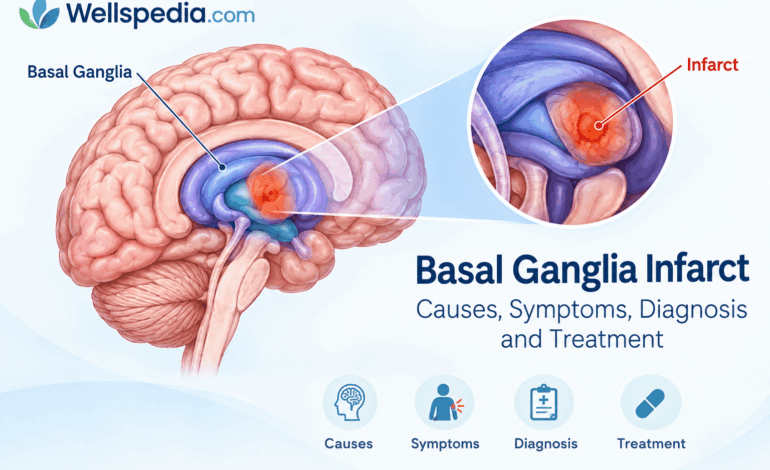
If the stroke is caused by interrupted blood flow rather than bleeding, it may be described as a basal ganglia infarct. Read our detailed Basal Ganglia Infarct guide for information about its causes, symptoms, diagnosis, and treatment.
What Is a Basal Ganglia Stroke?
The basal ganglia are groups of structures located deep within the brain that help regulate movement and other neurological functions. A stroke affecting this region can occur because of an interrupted blood supply or bleeding in the brain.
A basal ganglia stroke may be:
-
Ischemic stroke, caused by blocked blood flow
-
Hemorrhagic stroke, caused by bleeding in the brain
An ischemic stroke affecting the basal ganglia may result in a basal ganglia infarct.
Right vs Left Basal Ganglia Stroke
The side of the brain affected can influence which side of the body develops weakness, numbness, or movement problems.
| Stroke location | Possible effects |
|---|---|
| Right basal ganglia stroke | Left-sided weakness or sensory changes; possible spatial or attention difficulties |
| Left basal ganglia stroke | Right-sided weakness or sensory changes; possible speech or language difficulties |
These patterns are general. The exact symptoms depend on the specific structures and neural pathways affected.
Right Basal Ganglia Stroke Symptoms
A right basal ganglia stroke may affect the left side of the body because many motor pathways control the opposite side.
Possible symptoms include:
-
Weakness on the left side
-
Reduced sensation on the left side
-
Facial weakness
-
Difficulty walking or maintaining balance
-
Problems with coordination
-
Changes in movement control
-
Spatial or attention difficulties
-
Speech or communication changes
Right Basal Ganglia Infarct
When an ischemic stroke affects the right basal ganglia, it may be described as a right basal ganglia infarct.
The severity of symptoms depends on the size and precise location of the infarct and whether nearby brain structures are also affected.
For a detailed explanation of basal ganglia infarct causes, symptoms, diagnosis, and treatment, read our Basal Ganglia Infarct guide.
Left Basal Ganglia Stroke Symptoms
A left basal ganglia stroke can affect the right side of the body.
Possible symptoms include:
-
Right-sided weakness
-
Reduced sensation on the right side
-
Difficulty walking
-
Coordination problems
-
Changes in movement
-
Speech or language difficulties when relevant language pathways are affected
-
Changes in thinking or attention
Left Basal Ganglia Infarct
A left basal ganglia infarct refers to ischemic injury involving the left basal ganglia. Not everyone with a left basal ganglia infarct develops language problems because symptoms depend on the exact location and extent of the injury.
Why Does the Side of the Stroke Matter?
The brain contains interconnected pathways that control movement, sensation, communication, and other functions.
In general:
-
Right-sided brain injury → may affect the left side of the body
-
Left-sided brain injury → may affect the right side of the body
However, the exact effects depend on which structures and pathways are involved.
For the broader picture of basal ganglia stroke symptoms, types, treatment, and recovery, see our Basal Ganglia Stroke guide.
Movement Problems After a Basal Ganglia Stroke
Because the basal ganglia participate in movement regulation, a stroke affecting these structures can cause:
-
Weakness
-
Difficulty controlling movement
-
Poor coordination
-
Balance problems
-
Difficulty walking
-
Changes in muscle tone
-
Abnormal movements in some cases
The specific symptoms depend on the location and severity of the brain injury.
Right vs Left Basal Ganglia Stroke: Is One More Serious?
The seriousness of a basal ganglia stroke cannot be determined simply by whether it affects the right or left side.
Important factors include:
-
Size of the stroke
-
Exact location
-
Blood vessel involved
-
Severity of neurological impairment
-
Other brain regions affected
-
Complications
-
Speed of medical treatment
-
Overall health
-
Access to rehabilitation
Therefore, right- and left-sided strokes can have very different effects from person to person.
Diagnosis
Doctors may use:
-
Neurological examination
-
CT scan
-
MRI
-
CT or MR angiography when appropriate
-
Blood tests
-
ECG
-
Heart-rhythm monitoring
-
Other tests to determine the possible cause of the stroke
Brain imaging helps doctors determine the type and location of the stroke and guide treatment.
Treatment
Treatment depends on whether the stroke is ischemic or hemorrhagic, the timing of symptoms, imaging findings, the blood vessels involved, and the person’s overall medical condition.
For eligible patients with ischemic stroke, treatment may include thrombolytic therapy and, in selected cases, endovascular treatment.
Sudden stroke symptoms require immediate emergency medical evaluation.
Recovery After Right or Left Basal Ganglia Stroke
Recovery varies from person to person. Rehabilitation may involve:
Physical Therapy
Helps address strength, balance, walking, coordination, and movement problems.
Occupational Therapy
Helps improve the ability to perform everyday activities.
Speech and Language Therapy
May help with speech, language, communication, or swallowing difficulties.
Cognitive and Emotional Support
Some people experience changes in attention, memory, mood, behavior, or thinking after a stroke and may benefit from appropriate assessment and support.
For a detailed discussion of basal ganglia stroke recovery, rehabilitation, prognosis, and long-term effects, read our Basal Ganglia Stroke guide.
When to Seek Emergency Help
Stroke symptoms can appear suddenly. Seek emergency medical attention immediately if someone develops:
-
Sudden weakness or numbness, particularly on one side
-
Facial drooping
-
Difficulty speaking or understanding speech
-
Sudden confusion
-
Sudden difficulty walking or maintaining balance
-
Sudden vision problems
-
Sudden severe headache without a known cause
Frequently Asked Questions
Is a right basal ganglia stroke different from a left basal ganglia stroke?
Yes. The side affected can influence which side of the body develops weakness or sensory changes. Right-sided brain injuries commonly affect the left side of the body, while left-sided injuries commonly affect the right side.
What are the symptoms of a right basal ganglia infarct?
Possible symptoms include left-sided weakness, sensory changes, movement difficulties, coordination problems, and sometimes spatial or attention difficulties.
What are the symptoms of a left basal ganglia infarct?
Possible symptoms include right-sided weakness, sensory changes, movement difficulties, and, when relevant language pathways are affected, speech or language problems.
Can a basal ganglia stroke affect walking?
Yes. A stroke affecting movement-related circuits can contribute to weakness, impaired coordination, balance problems, or difficulty walking.
Can a basal ganglia stroke affect speech?
Yes. Speech or language difficulties may occur depending on the location and extent of the stroke and the neural pathways involved.
Does everyone recover completely from a basal ganglia stroke?
No. Recovery varies depending on the location and extent of brain injury, initial severity, complications, rehabilitation, and overall health.
Conclusion
Right and left basal ganglia strokes can produce different patterns of symptoms because each side of the brain generally controls the opposite side of the body. However, the exact effects depend on the location and extent of the brain injury.
For a complete overview of basal ganglia stroke symptoms, causes, treatment, and recovery, visit our Basal Ganglia Stroke guide.
For readers specifically looking for information about an ischemic basal ganglia infarct, link them to the Basal Ganglia Infarct guide.