Central Hypoventilation Syndrome: Causes, Types, Symptoms, and Treatment
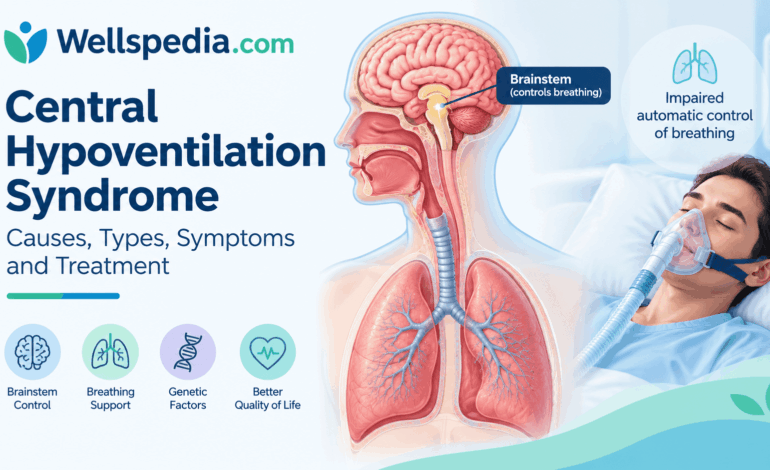
Central hypoventilation syndrome (CHS) is a rare breathing disorder in which the brain does not regulate breathing adequately. The problem is often more noticeable during sleep, when breathing normally continues without conscious effort. Affected individuals may breathe too slowly or shallowly, causing carbon dioxide to build up in the blood and oxygen levels to fall.
The condition can be present from birth or develop later because of an injury or disease affecting the brain’s respiratory control centers. Congenital central hypoventilation syndrome (CCHS) is commonly associated with changes in the PHOX2B gene, while acquired central hypoventilation may follow certain neurological conditions.
Although CHS can be serious and sometimes life-threatening, appropriate ventilatory support, continuous monitoring, and specialist care can help manage breathing problems and reduce complications.
Key Takeaways
- Central hypoventilation syndrome affects the body’s automatic control of breathing.
- Symptoms may become more pronounced during sleep and can include shallow breathing, pauses in breathing, low oxygen levels, and carbon dioxide retention.
- Congenital CHS is usually linked to changes in the PHOX2B gene, while acquired cases may result from damage to the brainstem or related neurological pathways.
- Diagnosis may involve sleep studies, carbon dioxide monitoring, blood-gas testing, genetic testing, and brain imaging.
- Treatment often requires long-term ventilatory support and regular follow-up with a specialist team.
- Early diagnosis and consistent treatment are important for preventing serious complications.
What Is Central Hypoventilation Syndrome?
Central hypoventilation syndrome is a disorder in which the nervous system fails to maintain adequate automatic breathing. Normally, the brain adjusts breathing rate and depth according to the body’s oxygen requirements and carbon dioxide levels. In CHS, this response is reduced or absent.
As a result, a person may not breathe deeply or frequently enough to remove the carbon dioxide produced by the body. This condition is called hypoventilation.
Carbon dioxide buildup, known medically as hypercapnia, can disturb the body’s acid-base balance. At the same time, inadequate ventilation can reduce the amount of oxygen reaching the bloodstream. If these problems persist, they can affect the brain, heart, lungs, and other organs.
CHS is more than an ordinary sleep-related breathing problem. Some people, particularly those with congenital disease, may also experience abnormalities involving other involuntary body functions, including heart rhythm, temperature regulation, blood pressure, and intestinal movement.
How Does Normal Breathing Work?
Breathing is controlled by networks of nerve cells in the brainstem. These networks send signals to the diaphragm and other breathing muscles, allowing the lungs to take in oxygen and remove carbon dioxide.
The process continues during sleep, when a person cannot consciously control every breath.
Specialized sensors in the body respond to changes in carbon dioxide, oxygen, and blood acidity. When carbon dioxide rises, the brain normally increases ventilation to help remove the excess gas.
In central hypoventilation syndrome, the automatic response may be insufficient. A person might therefore continue breathing too shallowly even when carbon dioxide is accumulating.
Why Is Carbon Dioxide Monitoring Important?
Oxygen saturation alone does not always reveal whether a person is breathing adequately. Someone can have an elevated carbon dioxide level even when a pulse oximeter initially shows a relatively reassuring oxygen reading.
For this reason, healthcare professionals may monitor carbon dioxide directly using methods such as end-tidal CO₂ monitoring or transcutaneous CO₂ monitoring. Blood-gas testing may also be used when clinically appropriate.
The combination of oxygen and carbon dioxide measurements provides a clearer picture of ventilation.
Types of Central Hypoventilation Syndrome
Central hypoventilation syndrome is generally divided into two main categories: congenital and acquired. Their causes, age of onset, and treatment considerations can differ.
1. Congenital Central Hypoventilation Syndrome (CCHS)
Congenital central hypoventilation syndrome is a rare genetic condition that affects the development and function of the autonomic nervous system, including the mechanisms responsible for automatic breathing.
Many affected newborns develop breathing difficulties soon after birth. However, milder cases may not become apparent until childhood or adulthood, particularly when breathing demands change or the person receives anesthesia or sedating medication.
The role of the PHOX2B gene
Most cases of CCHS are associated with disease-causing variants in the PHOX2B gene. This gene plays an important role in the development of nerve pathways involved in breathing and autonomic function.
PHOX2B variants are commonly grouped into two broad categories:
- Polyalanine repeat mutations (PARMs): These involve an expansion of a repeated sequence in the gene. The size of the expansion can be associated with the clinical presentation, although it cannot predict every individual’s symptoms.
- Non-polyalanine repeat mutations (NPARMs): These include other types of genetic changes that can affect how the gene functions. The associated features and severity vary.
Genetic testing can help confirm CCHS and inform family counseling and clinical management.
Other conditions associated with CCHS
Some individuals with CCHS also have problems involving other parts of the autonomic nervous system. These may include:
- Hirschsprung disease: A condition in which missing nerve cells in part of the intestine interfere with normal bowel movement. The combination of CCHS and Hirschsprung disease is sometimes called Haddad syndrome.
- Autonomic dysfunction: This may affect heart rate, blood pressure, temperature regulation, pupil responses, or gastrointestinal function.
- Neural crest-derived tumors: Certain individuals have an increased risk of tumors such as neuroblastoma or ganglioneuroma, depending in part on their genetic variant.
Not every person with CCHS develops these associated conditions. Screening and follow-up should be based on specialist recommendations.
2. Acquired Central Hypoventilation Syndrome (ACHS)
Acquired central hypoventilation syndrome develops after birth when a condition or injury interferes with the nervous system’s control of breathing.
The symptoms may begin suddenly or develop gradually, depending on the underlying cause.
Common causes
Brainstem stroke: A stroke affecting areas involved in respiratory control may disrupt the automatic breathing response.
Brainstem tumors: A tumor or other lesion near the brainstem may interfere with the nerve pathways responsible for breathing.
Head or spinal injury: Trauma affecting the brainstem, spinal cord, or nerves involved in breathing can impair ventilation.
Neurological surgery: Some procedures involving the brainstem or nearby structures may affect respiratory control.
Infections and inflammation: Conditions such as encephalitis or meningitis can sometimes damage the parts of the nervous system that regulate breathing.
Neurodegenerative disorders: Certain progressive neurological diseases, including multiple system atrophy, may be associated with abnormalities in breathing during sleep.
Treatment depends on identifying the underlying cause and assessing whether the impairment in respiratory control is reversible.
Symptoms of Central Hypoventilation Syndrome
Symptoms vary according to age, disease severity, and whether the condition is congenital or acquired. Some people have breathing abnormalities mainly during sleep, while others also require support when awake.
Common respiratory symptoms
Possible symptoms include:
- Slow, shallow, or irregular breathing
- Pauses in breathing during sleep
- Bluish discoloration of the lips or skin, known as cyanosis
- Elevated carbon dioxide levels in the blood
- Low oxygen levels
- Morning headaches
- Excessive daytime sleepiness
- Persistent fatigue or unrefreshing sleep
Some affected individuals do not experience the usual sensation of breathlessness despite having inadequate ventilation. This can delay recognition of the condition.
Symptoms in infants and children
In newborns and young children, CCHS may cause:
- Breathing pauses or inadequate breathing during sleep
- Cyanosis or unexplained low oxygen levels
- Poor feeding or difficulty maintaining adequate ventilation
- Unusual breathing patterns during illness or after sedation
- Abnormal heart rate or temperature regulation
- Gastrointestinal problems, particularly when another autonomic disorder is present
Prolonged or severe oxygen deprivation can affect development. Early recognition and appropriate respiratory support are therefore especially important.
Symptoms in older children and adults
People with milder or later-onset disease may experience:
- Persistent tiredness
- Morning headaches
- Reduced concentration or cognitive difficulties
- Daytime sleepiness
- Poor sleep quality
- Reduced exercise tolerance
- Symptoms related to autonomic dysfunction
Because these symptoms are not specific to CHS, clinicians may initially investigate other sleep-related or neurological disorders.
Complications of Central Hypoventilation Syndrome
Without appropriate management, inadequate ventilation can lead to serious health problems. The risks depend on how severe and persistent the breathing impairment is.
Potential complications include:
Chronic respiratory failure: Long-term inadequate ventilation can prevent the body from maintaining healthy oxygen and carbon dioxide levels.
Pulmonary hypertension: Persistent low oxygen levels can increase pressure in the blood vessels of the lungs.
Heart rhythm abnormalities: Autonomic dysfunction and abnormal blood gases may contribute to cardiac complications in some patients.
Neurological injury: Severe or prolonged oxygen deprivation can damage the brain and affect development or cognitive function.
Organ damage: Persistent problems with oxygenation and ventilation can affect several organs.
Life-threatening breathing events: Severe untreated hypoventilation or apnea can become fatal, particularly during sleep or when breathing is further suppressed by illness, anesthesia, or sedating medication.
People with CCHS may also experience complications related to associated intestinal, autonomic, or tumor-related conditions.
Prognosis and Life Expectancy
The long-term outlook for people with central hypoventilation syndrome varies considerably. Important factors include the severity of respiratory impairment, the presence of additional medical conditions, access to appropriate ventilatory support, and the quality of ongoing monitoring.
Advances in respiratory technology and multidisciplinary care have enabled many people with CCHS to survive into adulthood and participate in school, work, family life, and other activities.
However, CCHS remains a lifelong condition for many patients, and serious complications can occur. Individual prognosis should be discussed with the treating specialist rather than estimated from a general survival figure.
How Is Central Hypoventilation Syndrome Diagnosed?
Diagnosis involves assessing breathing patterns, measuring ventilation, and investigating possible genetic or acquired causes. The exact tests depend on the person’s age, symptoms, and medical history.
1. Medical history and physical examination
A clinician may ask about:
- Breathing changes during sleep
- Episodes of apnea or cyanosis
- Daytime fatigue and morning headaches
- Previous neurological injuries or illnesses
- Reactions to anesthesia or sedating medication
- Family history of similar symptoms or known PHOX2B variants
- Associated gastrointestinal or autonomic symptoms
A physical examination can help identify clues to an underlying neurological or respiratory disorder.
2. Polysomnography (Sleep Study)
A sleep study records several body functions during sleep. Depending on the study, these may include airflow, breathing effort, oxygen saturation, heart rate, and carbon dioxide levels.
Polysomnography can help identify sleep-related hypoventilation and distinguish central breathing abnormalities from obstructive sleep apnea.
3. Carbon Dioxide Monitoring
End-tidal or transcutaneous CO₂ monitoring can help determine whether carbon dioxide rises during sleep or at other times.
Continuous monitoring may be especially valuable when symptoms occur intermittently or when ventilation needs to be assessed during treatment.
4. Blood-Gas Testing
Arterial or other clinically appropriate blood-gas testing can measure carbon dioxide, oxygen, and acid-base status.
Elevated carbon dioxide may support the presence of hypoventilation. The results must be interpreted alongside the person’s clinical condition and other test findings.
5. PHOX2B Genetic Testing
Genetic testing is central to confirming congenital central hypoventilation syndrome. It can identify disease-causing PHOX2B variants and help guide family counseling.
A healthcare professional or genetic counselor can explain the results and discuss whether testing may be appropriate for relatives.
6. Brain Imaging
MRI or other imaging may be recommended when acquired central hypoventilation is suspected. Imaging can help identify brainstem lesions, stroke, tumors, or structural abnormalities.
Additional tests may be needed to investigate neurological, muscular, metabolic, or other causes of inadequate breathing.
Conditions That Can Resemble Central Hypoventilation Syndrome
Several conditions can cause abnormal breathing during sleep or elevated carbon dioxide. Distinguishing them from CHS is important because their treatments may differ.
Central Hypoventilation Syndrome vs. Obstructive Sleep Apnea
Central hypoventilation syndrome involves impaired automatic respiratory control. Breathing may be too shallow or slow even when the airway is open.
Obstructive sleep apnea (OSA) occurs when the upper airway repeatedly narrows or becomes blocked during sleep. Breathing effort may continue despite reduced airflow.
Some people can have more than one sleep-related breathing disorder, so testing may be needed to establish the cause.
Central Hypoventilation Syndrome vs. Obesity Hypoventilation Syndrome
Obesity hypoventilation syndrome is characterized by obesity, elevated carbon dioxide while awake, and sleep-related breathing abnormalities after other causes have been assessed.
Unlike congenital CHS, obesity hypoventilation syndrome is not primarily a PHOX2B-related genetic disorder.
Other conditions doctors may consider
- ROHHAD syndrome: A rare condition involving rapid-onset obesity, hypothalamic dysfunction, autonomic abnormalities, and possible hypoventilation.
- Prader-Willi syndrome: A genetic disorder that can involve low muscle tone, obesity, and sleep-related breathing problems.
- Chiari malformation: A structural abnormality near the base of the brain that can sometimes affect respiratory control.
- Neuromuscular disorders: Conditions affecting the nerves or muscles used for breathing may cause inadequate ventilation.
- Mitochondrial and metabolic disorders: Certain rare conditions can affect multiple organs and, in some cases, respiratory function.
- Other autonomic disorders: These may cause overlapping symptoms involving breathing, blood pressure, temperature, or heart rate.
The diagnostic process should consider the full clinical picture rather than relying on symptoms alone.
Treatment Options for Central Hypoventilation Syndrome
There is currently no established cure for congenital central hypoventilation syndrome. Treatment aims to maintain adequate ventilation, prevent complications, and support daily life. Management of acquired cases also includes treating the underlying cause whenever possible.
1. Mechanical Ventilation
Ventilatory support is a major part of treatment for people who cannot breathe adequately without assistance.
Depending on age, severity, and individual needs, options may include:
- Ventilation through a tracheostomy: A breathing tube placed through the neck may be used when reliable long-term ventilation is required, particularly in some infants and young children.
- Noninvasive ventilation: A mask-based device can support breathing without a tracheostomy in appropriately selected patients.
- Support during sleep or throughout the day: The schedule depends on how much independent breathing the person can maintain.
The choice of equipment and settings must be determined by a specialist team. Ventilation should not be started, stopped, or adjusted without medical guidance.
2. Diaphragm Pacing
In selected patients, diaphragm pacing may be an option. The technique uses electrical stimulation to activate the diaphragm and support breathing.
It is not suitable for everyone. Candidacy depends on factors such as nerve and diaphragm function, the person’s medical needs, and the experience of the treating center. Some patients may still require other forms of ventilatory support.
3. Oxygen and Carbon Dioxide Monitoring
Monitoring helps clinicians assess whether ventilation is adequate and whether treatment needs adjustment.
Depending on the care plan, monitoring may include:
- Oxygen saturation measurements
- Carbon dioxide monitoring
- Sleep studies at recommended intervals
- Assessment during respiratory illness or changes in health
- Evaluation after anesthesia or medication changes
Supplemental oxygen alone does not correct inadequate ventilation or carbon dioxide retention. Oxygen should be used only as directed by the treating clinician, with appropriate assessment of ventilation.
4. Screening for Associated Conditions
Some patients need additional specialist care for conditions associated with CCHS. Depending on their clinical features, this may include:
- Gastrointestinal assessment and treatment
- Cardiac monitoring
- Evaluation of autonomic dysfunction
- Eye examinations
- Screening for relevant tumors
- Developmental, educational, or psychological support
The care plan should be individualized and reviewed regularly.
5. Family Education and Support
Families and caregivers may need training in ventilator use, monitoring equipment, emergency procedures, and recognizing signs of respiratory deterioration.
Psychological support, school or workplace planning, and coordination between pediatric and adult services can also improve quality of life.
Living With Central Hypoventilation Syndrome
Although CHS can require significant ongoing care, a structured management plan can help individuals and families navigate everyday activities.
Follow the prescribed ventilation plan
Use ventilatory support for the duration recommended by the treating team. Do not assume that feeling well means breathing is adequate, particularly during sleep.
Prepare for respiratory illnesses
Infections can increase breathing demands and may worsen hypoventilation. Follow the healthcare team’s illness plan and seek advice early when symptoms change. Keep recommended vaccinations up to date.
Take extra precautions around anesthesia and sedating medication
Anesthesia, sedatives, and some prescription pain medicines can suppress breathing. Tell every healthcare professional involved in treatment that the person has CHS, especially before surgery, dental procedures requiring sedation, or emergency treatment.
Never stop a prescribed medicine without consulting the prescriber.
Plan for travel and daily activities
Travel may require advance arrangements for ventilators, batteries, alarms, backup equipment, and access to medical assistance. Families should discuss travel plans with the clinical team and carry relevant medical information.
Maintain regular follow-up
Ongoing care may involve respiratory medicine, sleep medicine, neurology, genetics, cardiology, and other specialties as needed. Adolescents transitioning to adult services should have a clear plan for transferring medical records and equipment support.
When Should You Seek Medical Attention?
Seek emergency medical care if someone develops severe breathing difficulty, prolonged pauses in breathing, blue or gray lips or skin, marked confusion, or reduced responsiveness.
For a person with diagnosed CHS, follow the individualized emergency plan provided by their healthcare team and do not delay emergency care when breathing or equipment problems are severe.
Arrange a medical assessment for persistent unexplained morning headaches, unusual daytime sleepiness, recurrent episodes of shallow breathing, or suspected sleep-related hypoventilation.
These symptoms can have several causes, so evaluation is needed before making a diagnosis.
Frequently Asked Questions
Can central hypoventilation syndrome occur only during sleep?
Yes. Some people, particularly those with congenital disease, have more pronounced hypoventilation during sleep. Others may also need ventilatory support while awake. The pattern varies between individuals and should be assessed through appropriate testing.
Is central hypoventilation syndrome hereditary?
Congenital central hypoventilation syndrome is associated with PHOX2B gene variants. Many cases arise from a new genetic change rather than being inherited from a parent, but inheritance can occur. Genetic counseling can help explain the risk for a particular family.
Acquired central hypoventilation syndrome is associated with an underlying injury or disease rather than being inherited in the same way.
Can a parent carry a PHOX2B variant without obvious symptoms?
Yes. In some families, a parent may carry a PHOX2B variant but have mild, unrecognized, or absent symptoms. Mosaicism can also affect whether a variant is detected in a blood sample. A genetics specialist can explain the implications of a test result and whether family testing is appropriate.
Can people with CCHS have children?
Some people with CCHS become parents. Pregnancy and childbirth require individualized planning because respiratory support needs may change. Genetic counseling is recommended because a person carrying a disease-causing PHOX2B variant may pass it on to a child.
Can CCHS be detected before birth?
Prenatal genetic testing may be possible when a disease-causing PHOX2B variant has already been identified in the family. A genetic counselor and specialist can discuss the available testing options, benefits, and limitations.
Why is carbon dioxide measured if oxygen levels are normal?
Oxygen saturation does not directly measure how effectively the body removes carbon dioxide. Carbon dioxide can rise when ventilation is inadequate, even before oxygen readings become clearly abnormal. Direct CO₂ assessment may therefore be an important part of diagnosis and ongoing monitoring.
Can central hypoventilation syndrome be mistaken for sleep apnea?
Yes. Both conditions can cause abnormal breathing during sleep, fatigue, and daytime sleepiness. However, central hypoventilation involves impaired automatic control of breathing, while obstructive sleep apnea involves repeated airway blockage. A sleep study and other tests can help distinguish them.
Does central hypoventilation syndrome require lifelong treatment?
Many people with congenital central hypoventilation syndrome require long-term or lifelong ventilatory support. In acquired cases, the need for support depends on the underlying cause and whether respiratory control improves. Treatment decisions must be made through ongoing clinical assessment.
Can a person with CHS live an active life?
Many people with CHS can participate in education, employment, family activities, and social life with suitable treatment and support. Their needs vary, and maintaining ventilation, monitoring, emergency preparedness, and regular follow-up remains essential.
Conclusion
Central hypoventilation syndrome is a rare disorder that disrupts the body’s automatic regulation of breathing. It can be congenital, often associated with PHOX2B gene variants, or acquired because of a condition affecting the brainstem or related pathways.
Symptoms may be subtle during the day but more serious during sleep. Sleep studies, carbon dioxide measurements, genetic testing, and appropriate imaging can help identify the cause and guide care.
Although the condition can be life-threatening without treatment, individualized ventilatory support, careful monitoring, and coordinated specialist care can improve safety and quality of life. Anyone experiencing concerning breathing symptoms should seek professional medical assessment.
For more evidence-informed health information and related medical articles, explore Wellspedia.com.
Medical Disclaimer: This article is for educational purposes only and does not replace professional medical advice, diagnosis, or treatment. Central hypoventilation syndrome requires specialist assessment and individualized care. If a person has severe breathing difficulty, blue or gray lips, or reduced responsiveness, seek emergency medical assistance immediately.