Newborn Rashes: ETN, Baby Acne, Heat Rash and Warning Signs
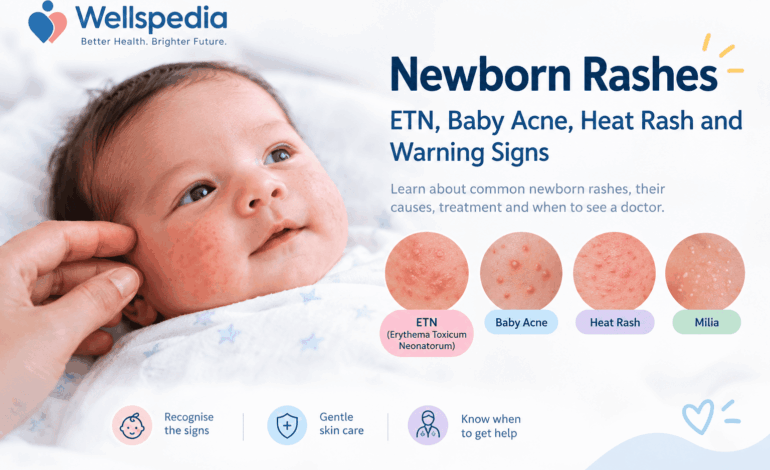
Seeing a rash on your newborn’s skin can worry you. However, many newborn rashes are common and harmless. Some appear during the first few days after birth, while others develop as your baby’s skin adjusts to the environment.
One common condition is erythema toxicum neonatorum (ETN). It causes red patches with small white or yellow bumps and usually disappears without treatment. However, other skin conditions can look similar, so parents should watch for warning signs.
In this guide, you will learn about common newborn rashes, how to recognise ETN, how these conditions differ, and when to contact a healthcare professional.
What Causes Newborn Rashes?
A newborn’s skin is still adjusting to life outside the womb. As a result, babies may develop temporary changes such as small bumps, redness, dryness, or peeling.
Common causes of newborn rashes include:
- Normal changes in the skin after birth
- Blocked pores or immature oil glands
- Heat and sweating
- Skin irritation from soaps, wipes, or clothing
- Certain skin conditions that require medical assessment
Most mild newborn rashes improve with time and gentle skin care. Nevertheless, a rash accompanied by fever, poor feeding, or unusual sleepiness needs prompt medical attention.
1. Erythema Toxicum Neonatorum (ETN)
Erythema toxicum neonatorum is a common, usually harmless skin condition that affects newborns. Despite the word “toxicum” in its name, it does not mean that your baby has been poisoned.
ETN often appears during the first few days after birth. It can develop as red or blotchy patches with small white or yellow bumps in the centre.
What Does ETN Look Like?
Common features include:
- Red or pink patches on the skin
- Small white or yellow bumps in the centre
- Spots on the face, chest, back, arms, or legs
- Spots that appear and disappear in different areas
- A baby who otherwise looks well and feeds normally
The palms and soles are usually unaffected.
Does ETN Need Treatment?
In most cases, ETN goes away on its own, often within one to two weeks. Specific treatment is usually unnecessary.
Parents should avoid squeezing the bumps or applying medicines without medical advice. Gentle skin care is generally enough.
For a more detailed explanation, read our existing guide to erythema toxicum neonatorum (ETN): the common and harmless newborn rash.
2. Baby Acne
Baby acne can cause small red bumps or whiteheads, often on a baby’s cheeks, forehead, and nose. It may appear during the first few weeks after birth.
Unlike ETN, baby acne often resembles pimples. Hormonal changes may contribute to its development.
How Is Baby Acne Managed?
Mild baby acne often improves without treatment. Parents can gently wash the baby’s face with lukewarm water and avoid scrubbing the skin.
Do not squeeze the spots or use adult acne creams unless a healthcare professional recommends them.
Contact your baby’s doctor if the rash becomes severe, develops blisters, or does not improve as expected.
3. Heat Rash
Heat rash develops when sweat becomes trapped in the skin. It can occur when a baby gets too warm or wears excessive layers of clothing.
The rash may look like tiny red bumps or small clear blisters. It often appears around the neck, upper chest, back, or skin folds.
How Can You Help?
You can help keep your baby comfortable by:
- Dressing your baby in lightweight clothing suited to the weather
- Keeping the room comfortably cool
- Avoiding excessive blankets and layers
- Keeping the skin clean and dry
Avoid applying thick creams or powders without medical advice, as some products may irritate the skin.
4. Milia
Milia are tiny white or yellowish bumps that commonly appear on a newborn’s face, especially around the nose and cheeks.
They develop when keratin becomes trapped beneath the skin’s surface. Milia are usually harmless and disappear without treatment.
Do not squeeze or scrape these bumps. Gentle cleansing is generally enough.
5. Irritant or Contact Rash
A baby’s skin can react to products that touch it. These may include scented soaps, detergents, wipes, lotions, or certain fabrics.
Irritation may cause redness, dryness, or patches of inflamed skin. The rash may appear in areas that have direct contact with the irritating product.
If you suspect irritation, stop using the suspected product and choose gentle, fragrance-free skin care. Ask a healthcare professional if the rash persists or worsens.
How Can You Tell Different Newborn Rashes Apart?
The following table provides a general guide. It cannot confirm a diagnosis because different skin conditions can look similar.
| Skin condition | Typical appearance | Common pattern |
|---|---|---|
| Erythema toxicum (ETN) | Red patches with small white or yellow bumps | Often begins in the first few days after birth |
| Baby acne | Small pimples or whiteheads | Commonly affects the cheeks and forehead |
| Heat rash | Tiny red bumps or clear blisters | Often appears in warm or sweaty areas |
| Milia | Tiny white or yellow bumps | Often appears around the nose and cheeks |
| Contact rash | Red, dry, or irritated skin | Often affects areas exposed to an irritant |
If you are unsure which condition your baby has, ask a healthcare professional to examine the rash.
When Is a Newborn Rash Dangerous?
Although many newborn rashes are harmless, some can indicate an infection or another serious problem.
Seek urgent medical assessment if your baby has a rash along with any of these signs:
- A temperature of 38°C (100.4°F) or higher in a baby younger than three months
- Poor feeding or refusal to feed
- Unusual sleepiness, difficulty waking, or reduced responsiveness
- Breathing difficulties
- Blisters, open sores, or rapidly spreading skin changes
- Purple or red spots that do not fade when pressed
- Signs that your baby is seriously unwell
Do not assume that a newborn’s rash is ETN if your baby has a fever or appears unwell. Some infections need immediate treatment.
How to Care for Your Newborn’s Skin
Gentle skin care can help protect your baby’s sensitive skin.
Follow these simple steps:
- Use lukewarm water and gentle, fragrance-free cleansing products.
- Avoid scrubbing the skin or squeezing bumps.
- Dress your baby in comfortable clothing appropriate for the temperature.
- Avoid unprescribed creams, adult skin products, and unnecessary medicines.
- Keep track of when the rash started and whether it is spreading or changing.
- Contact your healthcare professional if you are concerned about the appearance of the skin.
Avoid using home remedies on a newborn’s rash without medical advice. Some ingredients can irritate the skin or delay proper treatment.
Frequently Asked Questions
Is erythema toxicum dangerous for babies?
Erythema toxicum neonatorum is usually harmless and resolves without treatment. However, a healthcare professional should assess a rash if the baby has a fever, poor feeding, unusual sleepiness, or other concerning symptoms.
What does ETN look like in babies?
ETN usually appears as red patches with small white or yellow bumps. It often develops during the first few days after birth and may appear in different areas over time.
How long does a newborn toxic rash last?
ETN often clears within one to two weeks. The exact duration varies, and a persistent or worsening rash should be assessed by a healthcare professional.
Is ETN the same as baby acne?
No. ETN usually causes red patches with small central bumps, while baby acne often resembles pimples or whiteheads. A clinician can help distinguish between them.
Should I apply cream to an ETN rash?
Most babies with typical ETN do not need a specific cream or medicine. Avoid applying treatments unless a healthcare professional recommends them.
When should I call a doctor about my baby’s rash?
Seek urgent medical advice if your newborn has a fever, breathing difficulty, poor feeding, unusual sleepiness, blisters, or purple spots that do not fade when pressed. For babies younger than three months, a temperature of 38°C or higher requires urgent assessment.
Final Thoughts
Newborn rashes are common, and many disappear without treatment. Erythema toxicum neonatorum, baby acne, heat rash, and milia are different conditions that can affect a baby’s skin during the early weeks of life.
Although ETN is usually harmless, parents should not assume that every newborn rash has the same cause. Watch for changes in your baby’s skin, maintain gentle skin care, and seek medical advice when warning signs appear.
For more information about ETN specifically, visit our guide to erythema toxicum neonatorum and its symptoms.
Medical disclaimer: This article is for general educational purposes only. It does not replace professional medical advice, diagnosis, or treatment. Consult a qualified healthcare professional if you are concerned about your newborn’s rash.