Zenker’s Diverticulum: Symptoms, Causes, Diagnosis, and Treatment
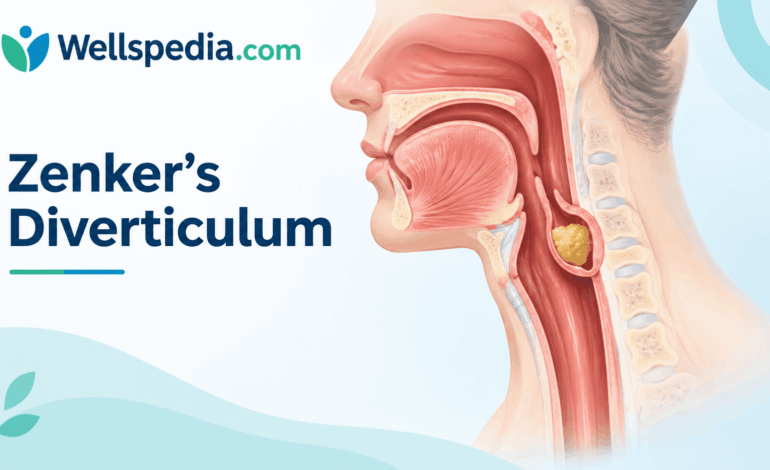
Zenker’s diverticulum is a condition in which a pouch develops near the junction of the throat and the esophagus (the food pipe). Food, liquids, and saliva can collect inside this pouch instead of moving smoothly toward the stomach. This may cause difficulty swallowing, bad breath, coughing, choking, and the return of undigested food into the mouth.
The condition is more common in older adults and may develop gradually over several years. While some people experience few symptoms, others may develop significant swallowing problems or complications that require medical treatment.
Understanding the symptoms, causes, diagnosis, and available treatments can help people recognize the condition and seek appropriate medical care.
Key Takeaways
- Zenker’s diverticulum is a pouch that forms near the upper entrance to the esophagus.
- Common symptoms include difficulty swallowing, regurgitation of undigested food, bad breath, coughing, and choking.
- The condition is associated with increased pressure during swallowing and dysfunction of the upper esophageal sphincter.
- A barium swallow study is commonly used to diagnose the condition.
- Treatment depends on symptoms, pouch size, overall health, and the risk of complications.
- Endoscopic procedures or open surgery may be recommended for significant symptoms.
- Persistent swallowing difficulties, unexplained weight loss, repeated choking, or respiratory infections require medical assessment.
What Is Zenker’s Diverticulum?
Zenker’s diverticulum is an abnormal pouch that develops in the back wall of the throat, just above the upper esophageal sphincter. This muscular valve normally relaxes during swallowing to allow food to enter the esophagus.
The pouch forms through a naturally weak area near the throat-esophagus junction, known as Killian’s triangle. Because it does not contain all the normal layers of the esophageal wall, it is classified as a false diverticulum.
When food enters the pouch, it may remain there instead of passing into the stomach. The trapped material can return to the mouth hours after eating. In some cases, food or secretions may enter the airway, increasing the risk of coughing, choking, and aspiration-related lung infections.
Small pouches may cause few symptoms, while larger ones can interfere significantly with swallowing and daily activities.
What Causes Zenker’s Diverticulum?
Zenker’s diverticulum usually develops because of abnormal pressure and coordination during swallowing.
Normally, the cricopharyngeus muscle, which forms part of the upper esophageal sphincter, relaxes as food moves from the throat into the esophagus. If this muscle does not relax adequately or the swallowing mechanism is poorly coordinated, pressure can build up in the throat.
Over time, this pressure may push the inner lining of the throat outward through a weak area, gradually creating a pouch.
Several mechanisms may contribute:
- Impaired muscle relaxation: The upper esophageal sphincter may not open properly during swallowing.
- Increased swallowing pressure: Food may require greater force to pass into the esophagus.
- Age-related changes: Changes in muscle coordination and tissue function may contribute to the condition.
- Abnormal swallowing mechanics: Problems affecting the movement of food through the throat may increase pressure in the area.
The exact cause can vary between individuals. Zenker’s diverticulum is not simply caused by eating particular foods or by poor eating habits.
Risk Factors for Zenker’s Diverticulum
Zenker’s diverticulum is most frequently diagnosed in older adults, particularly people over 60. However, age alone does not mean that someone will develop the condition.
Factors associated with a greater likelihood of developing it include:
- Older age: Changes in swallowing muscle function may contribute to pouch formation.
- Male sex: Studies have generally reported the condition more often in men.
- Swallowing muscle dysfunction: Problems with upper esophageal sphincter relaxation can increase pressure during swallowing.
- Neurological conditions: Certain conditions affecting nerve signals and muscle coordination may contribute to swallowing difficulties.
Neurological conditions such as stroke and Parkinson’s Disease may affect swallowing coordination and increase the risk of swallowing difficulties. People experiencing changes in swallowing should consult a healthcare professional for an appropriate assessment.
These factors do not necessarily cause Zenker’s diverticulum in every individual. A proper medical evaluation is needed to identify the cause of symptoms.
Symptoms of Zenker’s Diverticulum
Symptoms often begin gradually and may become more noticeable as the pouch enlarges. Some people initially mistake them for acid reflux or ordinary age-related swallowing problems.
1. Difficulty Swallowing
Difficulty swallowing, medically known as dysphagia, is one of the most common symptoms. Food may feel as though it is sticking in the throat or is not passing completely after a swallow.
People may need to swallow repeatedly or adjust how they eat. Symptoms may initially affect solid foods and, in more advanced cases, liquids.
2. Regurgitation of Undigested Food
Food trapped inside the pouch can return to the mouth without the forceful contractions associated with vomiting. This may happen long after a meal or when bending forward or lying down.
Regurgitated food may be recognizable and can have an unpleasant smell or taste.
3. Persistent Bad Breath
Food particles and secretions retained inside the pouch can break down and contribute to unpleasant breath, also called halitosis.
If bad breath continues despite good oral hygiene, especially alongside swallowing difficulties or food regurgitation, a medical evaluation may be helpful.
4. Coughing and Choking
Food, saliva, or secretions may enter the airway instead of moving safely into the esophagus. This is known as aspiration.
Possible warning signs include coughing during meals, choking after swallowing, or coughing at night after food has regurgitated.
5. A Feeling of Something Stuck in the Throat
Some people experience persistent fullness or a lump-like sensation in the throat. A larger pouch may occasionally cause visible swelling in the neck, although this does not occur in everyone.
6. Gurgling Sounds in the Neck
Air and fluid moving inside the pouch can sometimes produce unusual gurgling sounds or sensations around the throat or neck.
7. Voice Changes
Hoarseness or changes in voice quality may occur in some people, particularly when there is associated irritation or aspiration. Persistent voice changes should be evaluated rather than automatically attributed to Zenker’s diverticulum.
8. Unintentional Weight Loss
People who find swallowing difficult may begin eating less or avoiding certain foods. Over time, this can lead to weight loss, dehydration, and inadequate nutrition.
When to seek medical help: Arrange a medical assessment for persistent swallowing difficulties, unexplained weight loss, repeated regurgitation, or coughing during meals. Severe choking, difficulty breathing, or inability to swallow saliva requires urgent medical attention.
Complications of Zenker’s Diverticulum
Not everyone with Zenker’s diverticulum develops complications. However, a symptomatic or enlarging pouch can create problems that affect nutrition, breathing, and quality of life.
Aspiration and Pneumonia
Aspiration occurs when food, saliva, or other material enters the airway. If this material reaches the lungs, it can cause inflammation or aspiration pneumonia.
Repeated coughing while eating, nighttime choking, fever, or new breathing symptoms may indicate a problem that needs medical assessment.
Malnutrition and Dehydration
Swallowing difficulties may make it harder to eat enough food or drink adequate fluids. This can contribute to weight loss, dehydration, weakness, and nutritional deficiencies.
Recurrent Respiratory Infections
Repeated aspiration can increase the risk of respiratory complications, including recurring lung infections.
Reduced Quality of Life
Fear of choking, avoiding meals with others, and difficulty eating normally can affect daily life and social activities.
Rare Complications
Cancer arising within a Zenker’s diverticulum has been reported, but it is uncommon. New or progressive swallowing difficulties, unexplained weight loss, bleeding, or persistent pain should be assessed by a healthcare professional. These symptoms do not necessarily indicate cancer, but they should not be ignored.
How Is Zenker’s Diverticulum Diagnosed?
Diagnosis usually involves reviewing symptoms, examining the patient, and performing imaging or other tests to identify the pouch and assess swallowing.
1. Barium Swallow Study
A barium swallow, also called a contrast esophagram, is a key test for diagnosing Zenker’s diverticulum.
During the procedure, the patient swallows a contrast liquid while X-ray images are taken. The images show how the liquid moves through the throat and esophagus and can reveal the pouch’s location, size, and ability to empty.
This examination also helps clinicians understand how the pouch may be contributing to swallowing symptoms.
2. Upper Gastrointestinal Endoscopy
An endoscopy uses a flexible camera to examine the upper digestive tract. It may be recommended to investigate other causes of symptoms or assess the lining when clinically appropriate.
Special care is required because the instrument may accidentally enter the pouch rather than the esophagus. The clinician should be aware of the possibility of Zenker’s diverticulum before performing the procedure.
3. Swallowing Assessment
A clinician or speech-language pathologist may assess swallowing safety and coordination. Depending on the symptoms, a modified barium swallow study or another swallowing assessment may be useful, particularly when aspiration is suspected.
4. Esophageal Manometry
Esophageal manometry measures pressure and muscle coordination in the esophagus. It is not routinely necessary to confirm Zenker’s diverticulum but may be considered when another esophageal motility disorder is suspected.
Conditions That Can Resemble Zenker’s Diverticulum
Other disorders can cause similar symptoms, including:
- Gastroesophageal reflux disease (GERD): Stomach contents flow backward into the esophagus and may cause heartburn, irritation, or a lump-like sensation.
- Achalasia: A swallowing disorder in which the lower esophageal sphincter does not relax normally, making it difficult for food to enter the stomach.
- Esophagitis: Inflammation of the esophageal lining that may cause pain or difficulty swallowing.
- Esophageal narrowing or tumors: Structural changes can obstruct the passage of food.
- Killian-Jamieson diverticulum: A different type of pouch that develops near the upper esophagus but in a different anatomical location.
- Cricopharyngeal dysfunction: Abnormal opening or coordination of the upper esophageal sphincter can cause swallowing problems without necessarily forming a pouch.
The correct diagnosis matters because treatment varies depending on the underlying condition.
Treatment Options for Zenker’s Diverticulum
Treatment is based on the severity of symptoms, the size and anatomy of the pouch, the risk of aspiration, and the person’s overall health.
Some people with small pouches and no meaningful symptoms may be monitored. Those with persistent swallowing problems, regurgitation, or aspiration may benefit from an intervention.
1. Observation and Symptom Management
For selected people with minimal symptoms, a specialist may recommend observation rather than immediate surgery.
Management may include:
- Monitoring changes in swallowing and regurgitation.
- Reviewing weight, hydration, and nutritional status.
- Adjusting food textures when needed for swallowing safety.
- Reassessing symptoms if coughing, choking, or swallowing difficulties worsen.
Observation does not remove the pouch. Follow-up is important so that any progression or complication can be addressed.
2. Endoscopic Treatment
Endoscopic procedures treat the pouch from inside the throat, generally without a large external incision. They often involve dividing the tissue wall between the pouch and the esophagus, including the problematic cricopharyngeal muscle.
The aim is to create a more direct passage for food and reduce the pressure that contributes to pouch formation.
Flexible Endoscopic Septotomy
A flexible endoscope is passed through the mouth to reach the pouch. The clinician cuts the tissue separating the pouch from the esophagus so food can pass more easily.
This approach may be suitable for people who cannot easily tolerate a rigid endoscope. Bleeding, perforation, and recurrence are possible risks.
Rigid Endoscopic Diverticulotomy
A rigid instrument is used to divide the wall between the pouch and the esophagus. This technique may work well for appropriately selected patients, but the anatomy of the mouth and neck can affect whether it is feasible.
Z-POEM (Zenker Peroral Endoscopic Myotomy)
Z-POEM is an advanced endoscopic technique in which the clinician accesses the muscle through a small tunnel created beneath the lining of the esophagus. The muscle is divided to improve the passage of food.
It may be considered in selected patients, depending on local expertise and the pouch’s anatomy. As with other interventions, risks and the possibility of recurrence should be discussed with the treating specialist.
Endoscopic Stapling or Laser-Assisted Techniques
In selected cases, instruments such as surgical staplers or lasers can be used to divide the tissue wall between the pouch and esophagus. The most suitable technique depends on the pouch, the patient’s anatomy, and the clinician’s experience.
No single endoscopic method is best for every patient.
3. Open Surgery
Open surgery may be considered when the pouch is large, endoscopic treatment is unsuitable, previous treatment has not worked, or the clinical situation requires a different approach.
Common procedures include:
- Diverticulectomy: The pouch is surgically removed.
- Diverticulopexy: The pouch is repositioned or suspended to reduce food collection.
- Cricopharyngeal myotomy: The muscle responsible for abnormal pressure is divided to improve swallowing. This may be performed alongside another surgical procedure.
The choice depends on the individual case and the surgeon’s assessment.
Possible Risks of Treatment
Both endoscopic procedures and open surgery carry potential risks. These may include:
- Bleeding or infection.
- Injury or perforation of the throat or esophagus.
- Leakage from the treated area.
- Temporary or persistent swallowing difficulties.
- Voice changes due to injury or irritation of nearby nerves.
- Recurrence of symptoms or the need for another procedure.
- Complications related to anesthesia.
A specialist should explain the expected benefits, risks, alternatives, and recovery plan before treatment.
Recovery After Zenker’s Diverticulum Treatment
Recovery depends on the procedure performed, the person’s general health, and whether complications develop.
After treatment, the healthcare team may recommend a period of restricted oral intake followed by a gradual return to liquids and soft foods. The timing varies, and some patients may need imaging or a swallowing assessment before their diet is advanced.
Follow the treating team’s instructions rather than relying on a fixed recovery schedule.
What to Expect During Recovery
- Eating and drinking: Follow the recommended diet and advance food textures only when advised.
- Swallowing: Symptoms may improve after successful treatment, but improvement can vary.
- Activity: Resume normal activities according to the clinician’s advice.
- Follow-up: Attend appointments to review healing, swallowing function, and any recurring symptoms.
Seek medical attention if recovery is accompanied by fever, worsening neck or chest pain, breathing difficulties, inability to swallow, or other symptoms identified by the treating team as warning signs.
Can Zenker’s Diverticulum Return?
Yes. Symptoms can recur after treatment, particularly if the tissue separating the pouch and esophagus has not been fully divided or if the underlying swallowing problem persists.
A recurrence does not automatically mean that open surgery is necessary. The specialist can reassess the pouch and discuss whether repeat endoscopic treatment or another approach is appropriate.
Living With Zenker’s Diverticulum
Lifestyle adjustments may help some people manage symptoms while awaiting treatment or when a specialist recommends conservative care. These steps do not eliminate the pouch or replace medical assessment.
Eating and Swallowing Tips
- Eat slowly and take small bites.
- Chew food thoroughly before swallowing.
- Sit upright during meals.
- Avoid rushing meals or talking while chewing if this makes swallowing less safe.
- Follow advice from a clinician or swallowing specialist about suitable food textures.
- Remain upright after eating if this reduces regurgitation, unless your clinician advises otherwise.
Drinking water with meals may help some people, but it is not appropriate for everyone. If liquids trigger coughing or choking, seek a swallowing assessment rather than forcing yourself to drink more.
Which Foods Should Be Avoided?
There is no single diet that works for every person with Zenker’s diverticulum. Dry bread, tough meat, crackers, or sticky foods may be difficult for some people to swallow, while others may tolerate them.
A healthcare professional or speech-language pathologist can recommend food textures based on swallowing safety. Avoid eliminating many food groups without advice, as this can worsen nutritional problems.
Nutrition and Hydration
If swallowing difficulties reduce your food or fluid intake, tell your healthcare team. They may recommend changes in food consistency, nutritional support, or referral to a dietitian.
Unintentional weight loss, reduced urination, dizziness, or unusual weakness may be signs of inadequate intake and warrant medical assessment.
When Should You See a Doctor?
Arrange a medical appointment if you experience:
- Persistent or worsening difficulty swallowing.
- Food returning to your mouth long after meals.
- Repeated coughing or choking while eating.
- Unexplained weight loss.
- Ongoing bad breath accompanied by swallowing symptoms.
- Recurrent chest infections.
- A persistent sensation of food being stuck in the throat.
Seek emergency help for severe choking, difficulty breathing, inability to swallow saliva, or sudden severe symptoms.
Frequently Asked Questions About Zenker’s Diverticulum
Can Zenker’s diverticulum heal on its own?
The pouch generally does not disappear on its own. Some people with mild symptoms may be monitored, but treatment may be necessary if swallowing difficulties, regurgitation, or aspiration develops.
Is Zenker’s diverticulum dangerous?
It can become serious when food or secretions enter the airway, causing aspiration or lung infections. Difficulty eating can also lead to dehydration and malnutrition. The level of risk depends on symptoms and the individual’s health.
Does Zenker’s diverticulum cause bad breath?
Yes, it can. Food and secretions trapped inside the pouch may break down and contribute to persistent bad breath. However, dental problems, gum disease, dry mouth, and other conditions can also cause halitosis.
Can Zenker’s diverticulum cause coughing at night?
Yes. Food or fluid retained in the pouch may return to the throat when a person lies down and trigger coughing or choking. Nighttime symptoms should be discussed with a healthcare professional, particularly if they occur repeatedly.
Is surgery always necessary?
No. People with very mild or absent symptoms may be monitored. Treatment is more likely to be recommended when symptoms interfere with eating or when aspiration and other complications are a concern.
What is the best treatment for Zenker’s diverticulum?
There is no single best treatment for everyone. Endoscopic procedures are suitable for many patients, while open surgery may be appropriate in selected cases. The decision depends on the pouch’s size and anatomy, symptoms, general health, and specialist expertise.
How long does recovery take?
Recovery varies according to the procedure and the patient’s condition. Some people resume normal activities relatively quickly after endoscopic treatment, while open surgery may require a longer recovery. Diet progression and activity should follow the treating team’s instructions.
Can Zenker’s diverticulum cause weight loss?
Yes. Difficulty swallowing and fear of choking can lead people to eat and drink less than they need. Ongoing weight loss should be evaluated because it may indicate inadequate nutrition or another underlying problem.
Is Zenker’s diverticulum a type of cancer?
No. Zenker’s diverticulum is a pouch, not a cancer. Cancer developing within the pouch is rare, but concerning symptoms such as progressive swallowing difficulty, bleeding, or unexplained weight loss need medical evaluation.
Conclusion
Zenker’s diverticulum is a swallowing disorder that develops when a pouch forms near the upper entrance to the esophagus. Common symptoms include difficulty swallowing, regurgitation of undigested food, bad breath, coughing, and choking.
A barium swallow study can help confirm the diagnosis, while treatment ranges from observation in selected mild cases to endoscopic procedures or open surgery for more troublesome symptoms. Early assessment is important when swallowing problems persist, especially if they are accompanied by weight loss, repeated choking, or respiratory infections.
If you or someone you care for has these symptoms, consult a qualified healthcare professional for an appropriate evaluation and personalized treatment plan.
For more health information and related medical articles, please use the Wellspedia.com search engine.
Medical Disclaimer: This article is for educational purposes only and is not a substitute for professional medical advice, diagnosis, or treatment. Consult a qualified healthcare professional about symptoms or concerns related to swallowing.
Suggested Medical References
For medical review and fact-checking before publication, consult:
- Cleveland Clinic — patient information on Zenker’s diverticulum and treatment.
- Merck Manual Professional Edition — information on esophageal diverticula.
- National Institute of Diabetes and Digestive and Kidney Diseases (NIDDK) — information on swallowing disorders and esophageal conditions.
- Peer-reviewed clinical reviews and gastroenterology or otolaryngology guidance on Zenker’s diverticulum management.