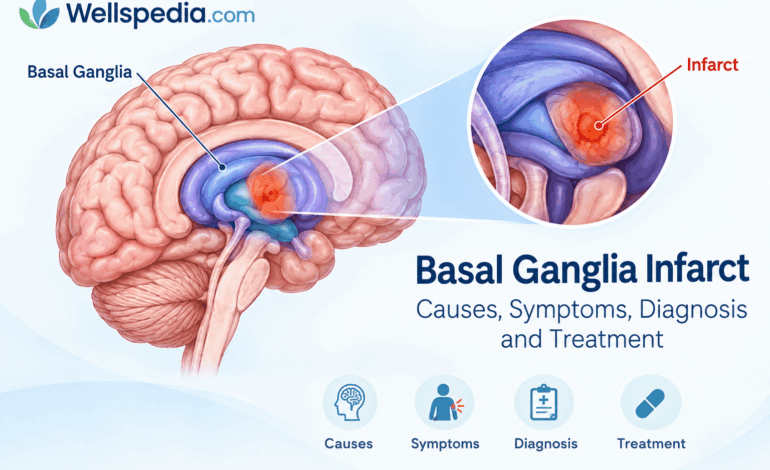
Basal Ganglia Infarct: Causes, Symptoms, Diagnosis and Treatment
What Is a Basal Ganglia Infarct?
A basal ganglia infarct is one form of basal ganglia stroke. Read our complete guide to learn more about the different types, symptoms, treatment, and recovery.
A basal ganglia infarct is an area of brain tissue injury caused by an interruption of blood flow to the basal ganglia. Because the affected tissue does not receive enough oxygen and nutrients, brain cells can become damaged or die.
A basal ganglia infarct is generally a form of ischemic stroke. Small deep infarcts in structures such as the basal ganglia can occur when small penetrating arteries become blocked. This pattern is often associated with small-vessel disease, although other mechanisms, including embolic and large-vessel disease, can also contribute.
The basal ganglia are involved in movement and other neurological functions, so symptoms can include weakness, changes in coordination, speech difficulties, sensory changes, or problems with movement.
A basal ganglia infarct requires urgent medical assessment because treatment depends on the timing, location, severity, and cause of the stroke.
Causes of Basal Ganglia Infarction
A basal ganglia infarct occurs when blood supply to part of the brain is blocked. Several mechanisms can cause this blockage.
1. Small-Vessel Disease
Small penetrating arteries supply deep areas of the brain. Damage to these vessels can lead to a lacunar infarct involving the basal ganglia.
Long-term high blood pressure and diabetes are important risk factors for cerebral small-vessel disease. Smoking and abnormal cholesterol levels can also contribute to vascular damage.
2. Blood Clots
A clot can obstruct an artery supplying the brain. Some clots develop elsewhere in the body and travel to the brain, while others develop in diseased blood vessels.
3. Atherosclerosis
A buildup of plaque inside arteries can narrow the blood vessel and contribute to reduced blood flow or clot formation.
4. Cardiac Sources
Certain heart conditions can increase the risk of blood clots that travel to the brain. Doctors may therefore investigate the heart when determining why an ischemic stroke occurred.
5. Other Vascular Conditions
Less common vascular disorders and other medical conditions can also contribute to cerebral infarction. The exact cause should be determined by a healthcare professional rather than assumed from symptoms alone.
Risk Factors for a Basal Ganglia Infarct
Factors that can increase the risk of ischemic stroke include:
-
High blood pressure
-
Diabetes
-
High LDL cholesterol
-
Smoking
-
Heart disease
-
Atrial fibrillation and other rhythm disorders
-
Previous stroke or transient ischemic attack
-
Obesity and physical inactivity
-
Increasing age
-
Certain vascular conditions
-
Family or genetic factors in some cases
Not every person with these risk factors will develop a basal ganglia infarct, and a stroke can sometimes occur without an obvious risk factor.
Basal Ganglia Infarct Symptoms
Symptoms depend on the location and extent of the infarct and which neurological pathways are affected.
Possible symptoms include:
-
Sudden weakness or numbness, particularly on one side of the body
-
Difficulty moving an arm or leg
-
Problems with coordination or balance
-
Speech difficulties
-
Facial weakness
-
Changes in sensation
-
Slurred speech
-
Difficulty walking
-
Changes in muscle control
-
Problems performing precise movements
Some small deep strokes can produce relatively specific neurological patterns. Lacunar strokes, for example, may cause pure motor or sensory symptoms, ataxic hemiparesis, or dysarthria-clumsy hand syndrome.
Sudden Symptoms Need Emergency Evaluation
Stroke symptoms can appear suddenly. If someone develops sudden facial weakness, arm weakness, speech difficulty, severe imbalance, or another new neurological symptom, seek emergency medical care immediately.
Do not wait for symptoms to disappear on their own.
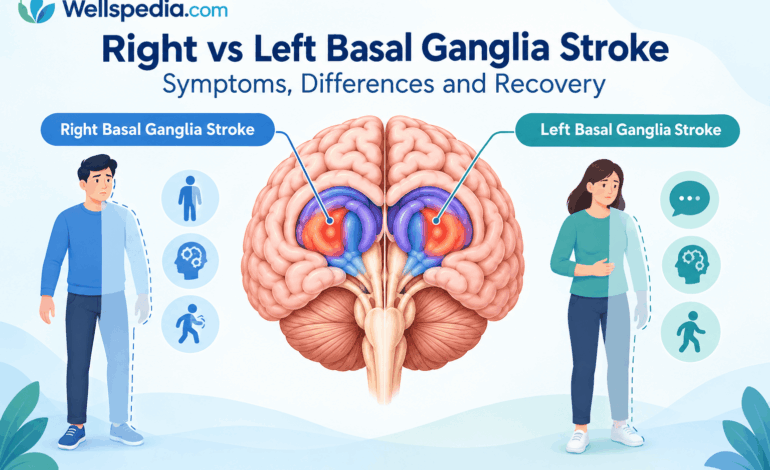
Right vs. Left Basal Ganglia Infarct
The symptoms of a basal ganglia infarct can differ depending on the side and structures involved.
Right Basal Ganglia Infarct
A right-sided lesion can affect movement and sensation on the opposite side of the body. Some people may also experience difficulties involving attention, spatial processing, or other neurological functions depending on the exact structures affected.
Left Basal Ganglia Infarct
A left-sided lesion can cause weakness or sensory changes on the opposite side. If nearby language-related pathways are affected, speech or language problems may also occur.
However, right-sided and left-sided strokes do not produce identical symptoms in every patient. The precise location and size of the infarct matter.
How Is a Basal Ganglia Infarct Diagnosed?
Doctors generally combine the person’s symptoms and medical history with neurological examination and brain imaging.
Medical and Neurological Examination
The healthcare team may assess:
-
Muscle strength
-
Sensation
-
Reflexes
-
Coordination
-
Balance
-
Speech and language
-
Vision
-
Level of consciousness
Doctors also need to establish when the symptoms started or when the person was last known to be well, because treatment decisions can depend on timing.
CT Scan
A non-contrast CT scan is commonly used during the initial evaluation of suspected stroke because it can rapidly help identify bleeding and other important findings.
MRI
MRI can provide detailed information about brain tissue and can help identify an ischemic infarct.
Additional Tests
Depending on the individual situation, doctors may also order:
-
CT angiography
-
CT perfusion
-
MR angiography
-
Blood tests
-
Electrocardiogram
-
Heart monitoring
-
Echocardiography
-
Vascular studies
The purpose is not only to confirm the stroke but also to determine its mechanism and guide treatment.
Basal Ganglia Infarct Treatment
Treatment depends on when symptoms began, the patient’s condition, imaging findings, the location and size of the infarct, and the suspected cause.
Emergency Treatment
Acute ischemic stroke treatment focuses on restoring blood flow when appropriate and preventing additional brain injury.
The 2026 American Heart Association/American Stroke Association guideline supports rapid assessment and treatment of eligible acute ischemic stroke patients. It includes updated recommendations concerning intravenous thrombolysis and endovascular treatment.
Thrombolytic Treatment
For selected eligible patients, intravenous thrombolytic medication may be used to dissolve a blood clot.
The 2026 guideline supports alteplase or tenecteplase for eligible patients within the standard 4.5-hour thrombolysis window, with additional pathways for selected patients based on advanced imaging and clinical circumstances.
Not everyone with a basal ganglia infarct is eligible. Doctors must assess bleeding risk, timing, imaging, symptoms, medications, and other factors.
Mechanical Thrombectomy
Some ischemic strokes caused by a large-vessel blockage can be treated with a catheter-based procedure called mechanical thrombectomy.
Eligibility depends on factors such as the blocked vessel, imaging findings, time from symptom onset or last-known-well time, and the patient’s clinical condition. The 2026 guideline has broadened eligibility for endovascular treatment in selected patients.
Antiplatelet or Other Medicines
Depending on the cause and clinical circumstances, doctors may prescribe antiplatelet medicines or other treatments to reduce the risk of another stroke.
Medication should be selected and prescribed by the treating healthcare professional.
Recovery After a Basal Ganglia Infarct
Recovery after a basal ganglia infarct can vary considerably from one person to another. The extent and location of the brain injury, severity of the initial symptoms, speed of treatment, overall health, complications, and access to rehabilitation can all influence recovery.
For a broader overview of basal ganglia stroke symptoms, types, treatment, prognosis, and recovery, read our Basal Ganglia Stroke: Types, Symptoms, Treatment & Recovery Guide.
Factors That May Affect Recovery
Several factors can influence the recovery process, including:
- Size and location of the infarct
- Severity of the initial neurological symptoms
- How quickly treatment was provided
- Other health conditions and stroke risk factors
- Complications following the stroke
- Access to appropriate rehabilitation
- Participation in rehabilitation and follow-up care
- Management of risk factors to help prevent another stroke
Rehabilitation After a Basal Ganglia Infarct
Rehabilitation is tailored to the person’s specific problems and may involve several healthcare professionals.
Physical Therapy
Physical therapy can help address problems with strength, balance, coordination, walking, and movement.
Occupational Therapy
Occupational therapy focuses on improving the ability to perform everyday activities, such as dressing, eating, bathing, writing, and other tasks that may have become difficult after the stroke.
Speech and Language Therapy
Some people develop difficulties with speech, language, communication, or swallowing after a stroke. A speech-language therapist can assess these problems and provide appropriate rehabilitation.
Cognitive and Emotional Support
A stroke can sometimes be followed by changes in attention, thinking, memory, mood, or behavior. Appropriate assessment and support can help identify these difficulties and address their impact on daily life.
How Long Does Recovery Take?
There is no single recovery timeline for a basal ganglia infarct. Some improvements may occur relatively early, while other abilities can take longer to regain. Recovery may continue over an extended period, particularly when rehabilitation is appropriately matched to the person’s needs.
The outcome depends on the individual’s neurological injury, overall health, complications, and rehabilitation needs. Recovery should therefore be assessed individually rather than predicted from the diagnosis alone.
Important: Rehabilitation should be guided by qualified healthcare professionals. Treatment plans can differ depending on the person’s symptoms, medical history, and functional needs.
Possible Complications
A basal ganglia infarct may lead to complications depending on the affected brain structures and severity of the stroke.
Possible complications include:
-
Persistent weakness
-
Difficulty walking
-
Coordination problems
-
Speech or communication difficulties
-
Swallowing problems
-
Changes in sensation
-
Cognitive difficulties
-
Mood changes
-
Muscle stiffness or abnormal movements
-
Reduced independence with daily activities
Early assessment and appropriate rehabilitation can help address these problems.
How to Reduce the Risk of Another Basal Ganglia Infarct
After an ischemic stroke, preventing another stroke becomes an important part of long-term care.
A healthcare professional may recommend:
-
Controlling blood pressure
-
Managing diabetes
-
Monitoring cholesterol
-
Stopping smoking
-
Maintaining a healthy weight
-
Staying physically active as medically appropriate
-
Taking prescribed medications consistently
-
Managing heart conditions
-
Following recommended dietary changes
-
Attending follow-up appointments
The prevention plan should be individualized according to the cause of the original stroke.
When to Seek Emergency Help
A suspected stroke should be treated as a medical emergency.
Watch for sudden:
-
Facial drooping
-
Arm or leg weakness
-
Numbness
-
Speech difficulty
-
Confusion
-
Vision problems
-
Loss of balance
-
Difficulty walking
-
Severe or unusual neurological symptoms
Do not drive yourself or wait for symptoms to improve. Contact your local emergency medical service immediately.
Rapid stroke recognition and treatment can affect treatment options and outcomes. Current American Heart Association/American Stroke Association guidance emphasizes rapid assessment, imaging, and timely treatment for eligible acute ischemic stroke patients.
Frequently Asked Questions
What is a basal ganglia infarct?
A basal ganglia infarct is an area of brain injury caused by inadequate blood flow to part of the basal ganglia. It is generally a type of ischemic stroke.
Is a basal ganglia infarct the same as a stroke?
A basal ganglia infarct is a type of ischemic stroke when the infarction results from an interruption of blood flow to brain tissue.
What causes a basal ganglia infarct?
Common mechanisms include small-vessel disease, atherosclerosis, blood clots, and embolic sources. High blood pressure and diabetes are important risk factors for small-vessel disease.
What are the symptoms of a basal ganglia infarct?
Symptoms can include sudden weakness or numbness, movement problems, coordination difficulties, speech changes, facial weakness, and difficulty walking. The exact symptoms depend on the affected structures.
Can a basal ganglia infarct affect one side of the body?
Yes. Because many motor and sensory pathways cross between the brain and body, a basal ganglia infarct can cause symptoms affecting the opposite side of the body.
How is a basal ganglia infarct diagnosed?
Doctors use the medical history, neurological examination, and brain imaging such as CT or MRI. Additional vascular, cardiac, and laboratory tests may be used to identify the cause.
Can a basal ganglia infarct be treated?
Yes. Treatment depends on the patient’s situation. Selected patients with acute ischemic stroke may receive thrombolytic medication, while some patients with eligible large-vessel blockages may undergo mechanical thrombectom
Can someone recover from a basal ganglia infarct?
Recovery is possible, but outcomes vary. Rehabilitation and management of stroke risk factors can be important parts of recovery and secondary prevention.
Is a basal ganglia infarct always severe?
No. Severity varies according to the size and location of the infarct and the neurological pathways involved. Even a relatively small infarct can cause significant symptoms in some locations.
Conclusion
A basal ganglia infarct is a type of ischemic brain injury caused by interrupted blood flow to the basal ganglia. Symptoms can include weakness, numbness, movement problems, coordination difficulties, and speech changes.
Because stroke treatment is time-sensitive, sudden neurological symptoms require immediate emergency evaluation. Diagnosis usually involves neurological assessment and brain imaging, while treatment depends on the underlying cause, timing, imaging findings, and individual eligibility for therapies.
Recovery may involve physical, occupational, speech, and other forms of rehabilitation, together with long-term management of stroke risk factors.