Hair Transplantation: Procedures, Types, Recovery, Benefits and Risks
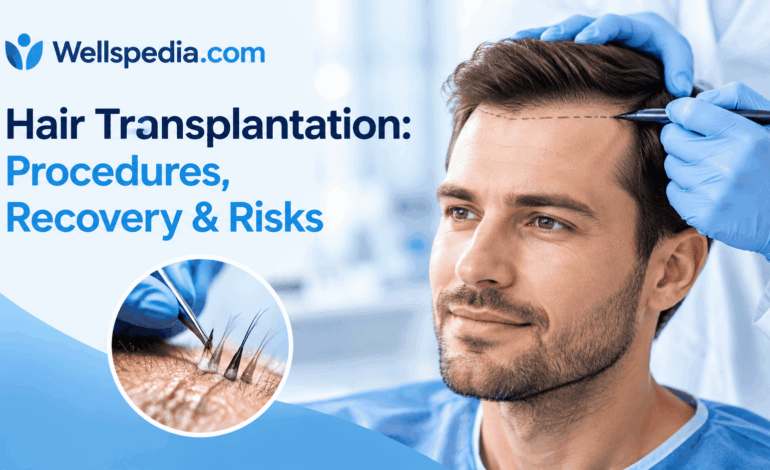
Hair loss can affect appearance, confidence, and quality of life. Although shedding a certain amount of hair each day is normal, progressive thinning or bald patches may become noticeable over time. Hair loss can affect both men and women and may result from genetics, hormonal changes, medical conditions, aging, medications, or other factors.
For people with permanent hair loss, hair transplantation is one option that can restore hair growth in areas where follicles have been lost. Unlike shampoos, supplements, or cosmetic products, a transplant involves moving healthy hair follicles from one part of the scalp to another.
However, hair transplantation is not suitable for everyone. The cause of hair loss, availability of healthy donor hair, age, scalp condition, and expectations all need to be considered before treatment.
What Is Hair Transplantation?
Hair transplantation is a surgical procedure in which hair follicles are taken from a donor area of the scalp and placed into areas affected by thinning or baldness.
The donor area is commonly located at the back or sides of the scalp because these follicles are often more resistant to the hormonal processes responsible for common pattern hair loss.
Once transplanted, healthy follicles can continue producing hair in their new location. The results develop gradually rather than immediately, because transplanted follicles need time to establish themselves and enter their normal growth cycle.
A hair transplant does not necessarily prevent future hair loss from untreated areas. For this reason, a dermatologist or hair-restoration specialist may recommend medical treatment alongside or after transplantation.
Who May Consider a Hair Transplant?
Hair transplantation may be considered by people who have:
- Pattern hair loss with sufficient donor hair
- Receding hairlines
- Thinning around the crown
- Localized bald areas
- Certain forms of permanent hair loss caused by injury or scarring
- Stable hair loss where the expected progression can be reasonably assessed
A medical evaluation is important because not every type of hair loss should be treated with transplantation. Temporary shedding, nutritional deficiencies, inflammatory scalp disorders, and some medical conditions may require treatment of the underlying cause instead.
What Happens Before Hair Transplant Surgery?
The process generally begins with a consultation. During this appointment, the doctor examines the scalp, reviews the patient’s medical and hair-loss history, and assesses the density of the donor hair.
The treatment plan may include:
- Identifying the likely cause of hair loss.
- Examining the donor area.
- Assessing the pattern and extent of thinning.
- Designing an appropriate hairline when necessary.
- Estimating how many grafts may be required.
- Discussing realistic expectations and possible risks.
- Reviewing medications and other medical factors that could affect surgery or healing.
Patients should tell their doctor about existing medical conditions, allergies, medications, and previous scalp procedures.
How Is a Hair Transplant Performed?
Most modern hair transplantation procedures are performed using local anesthesia, which numbs the scalp while the patient remains awake.
The procedure generally has two major stages:
1. Harvesting Hair Follicles
Healthy follicles are collected from a suitable donor region. The exact harvesting method depends on the transplantation technique.
2. Implanting the Grafts
The surgeon prepares recipient sites in areas where hair needs to be restored. The harvested follicles are then carefully placed into these sites, taking into account the direction, angle, and distribution of natural hair growth.
The procedure can take several hours, depending on the number of grafts and the technique used.
Most patients do not require an overnight hospital stay.
Main Types of Hair Transplantation
The two commonly discussed traditional hair transplantation approaches are:
- Follicular Unit Extraction (FUE)
- Follicular Unit Transplantation (FUT), also called the strip method
Both techniques aim to move healthy hair follicles to areas affected by hair loss, but they differ in how the donor follicles are collected.
Follicular Unit Extraction (FUE)
Follicular Unit Extraction (FUE) involves removing individual follicular units from the donor area using small specialized instruments.
The extracted follicles are then transferred to prepared recipient sites.
Advantages of FUE
Potential advantages include:
- Individual follicular units are harvested rather than removing a strip of scalp.
- Small extraction sites are distributed across the donor region.
- There is no linear donor-site incision.
- Healing of individual extraction points is generally relatively quick.
- It may be suitable for people who prefer to wear shorter hairstyles.
The donor area generally needs to be shaved or closely trimmed, although some specialized approaches may reduce the amount of visible shaving.
Limitations of FUE
FUE can be a lengthy procedure because follicles are harvested individually. The number of grafts that can safely be removed is also limited by the available donor supply.
Overharvesting can make the donor area appear thinner, so careful planning is important.
Follicular Unit Transplantation (FUT)
Follicular Unit Transplantation (FUT), commonly known as the strip method, involves removing a narrow strip of scalp from the donor region.
The strip is divided into smaller grafts containing individual follicular units. These grafts are subsequently placed into the recipient areas.
Potential Benefits of FUT
FUT may allow a surgeon to obtain a relatively large number of follicular units from the donor area during one procedure. It can therefore be considered in some patients who require a larger number of grafts.
Limitations of FUT
Because a strip of skin is removed, the donor area requires closure with sutures. This results in a linear scar, although its visibility can vary depending on healing, hair length, surgical technique, and individual factors.
Compared with FUE, FUT may involve more noticeable donor-site discomfort during recovery.
FUE vs FUT: What Is the Difference?
| Feature | FUE | FUT |
|---|---|---|
| Follicle harvesting | Individual follicular units | Strip of scalp |
| Linear scar | No | Yes |
| Donor area | Multiple small extraction sites | Sutured incision |
| Procedure | Often more time-consuming | May be faster for larger graft numbers |
| Short hairstyles | May be preferable for some patients | Scar may be more visible with very short hair |
| Suitability | Depends on donor density and goals | Depends on donor supply and treatment plan |
There is no single technique that is appropriate for every patient. The choice should be based on donor hair characteristics, the degree and pattern of hair loss, hairstyle preferences, previous procedures, and the surgeon’s assessment.
What Happens After a Hair Transplant?
Recovery varies from person to person and depends on the technique and number of grafts transplanted.
Temporary symptoms can include:
- Scalp swelling
- Redness
- Mild pain or tenderness
- Scabbing around transplanted follicles
- A tight or uncomfortable sensation
- Temporary numbness
- Bruising in some cases
Patients are usually given specific instructions about washing the scalp, protecting the grafts, physical activity, medications, and follow-up appointments.
Following aftercare instructions carefully can help protect the newly transplanted follicles during the early healing period.
When Does Transplanted Hair Start Growing?
Hair transplantation does not produce an immediate full head of hair.
It is common for some transplanted hairs to shed during the early period after surgery. This does not necessarily mean that the transplant has failed. The follicle can remain in the scalp and later produce new hair.
Visible growth develops gradually over subsequent months. The final cosmetic result may take many months to assess, and some patients may require additional treatment depending on their hair-loss pattern and goals.
Possible Side Effects and Complications
Most patients experience some temporary effects following surgery, but complications can occur.
Possible side effects include:
- Swelling
- Bruising
- Pain or tenderness
- Scalp numbness
- Itching
- Scabbing
- Temporary redness
- Infection
- Bleeding
- Scarring
- Changes in sensation
- Poor growth of transplanted follicles
Rarely, tissue damage or other significant complications may occur.
The risk depends on factors such as the surgical technique, the patient’s health, aftercare, and the experience of the medical team.
Can a Hair Transplant Stop Future Hair Loss?
A transplant moves existing hair follicles; it does not necessarily stop the biological process causing hair loss.
For example, a person may continue losing untreated hair surrounding the transplanted region. This can affect the appearance of the hairline or crown over time.
Depending on the diagnosis, a doctor may recommend additional treatments to help maintain existing hair. These may include prescription or other evidence-based therapies when medically appropriate.
How Long Do Hair Transplant Results Last?
Transplanted follicles are generally selected from areas that are relatively resistant to the mechanisms responsible for common pattern hair loss. When appropriately selected and successfully transplanted, they may continue producing hair for many years.
However, individual results vary.
The long-term appearance depends on:
- The cause of hair loss
- Donor hair quality
- Age
- Genetics
- Progression of untreated hair loss
- Surgical technique
- Number and quality of transplanted grafts
- Postoperative care
A consultation with a qualified medical professional is therefore essential before deciding on surgery.
How to Improve the Chances of a Good Result
Patients considering transplantation should focus on realistic expectations rather than promising before-and-after claims.
Helpful steps include:
- Obtain a proper diagnosis before treatment.
- Choose a qualified and appropriately trained medical professional.
- Ask which transplantation technique is being recommended and why.
- Discuss the expected number of grafts.
- Ask about possible scars and recovery.
- Understand that new growth takes time.
- Discuss whether ongoing hair-loss treatment may be necessary.
- Follow postoperative instructions carefully.
- Ask about possible complications before consenting to surgery.
Is Hair Transplantation Right for You?
Hair transplantation can be an effective option for selected people with permanent hair loss, but it is not a universal solution.
The most important first step is determining why the hair is falling out. Some causes can be managed medically without surgery, while others may benefit from a restorative procedure.
A dermatologist or qualified hair-restoration surgeon can evaluate your scalp and donor hair and explain which options are appropriate for your individual situation.
Frequently Asked Questions
Is a hair transplant painful?
Hair transplantation is generally performed under local anesthesia, which numbs the scalp during the procedure. Some tenderness, discomfort, swelling, or tightness may occur during recovery.
Does transplanted hair look natural?
When the procedure is appropriately planned and performed, transplanted follicles can be positioned to follow the natural direction and distribution of existing hair. The final appearance depends on donor hair quality, graft placement, hairline design, and other individual factors.
How long does a hair transplant take?
The duration varies according to the technique and number of grafts being transplanted. Larger procedures can require several hours and may sometimes be divided into more than one session.
Can women have hair transplants?
Yes. Women can also undergo hair transplantation when they have an appropriate type and pattern of hair loss and sufficient donor hair. However, the cause of thinning should be evaluated before surgery.
Does a hair transplant leave scars?
Scarring depends on the technique. FUT produces a linear donor-site scar, whereas FUE creates numerous small extraction sites rather than one linear incision. How visible the scars become varies between individuals.
Is hair transplant surgery permanent?
Transplanted follicles may provide long-lasting hair growth, but surrounding untreated hair can continue to thin. The long-term outcome therefore varies from person to person.
Final Takeaway
Hair transplantation can restore hair to selected areas of the scalp by relocating healthy follicles from a donor region. FUE and FUT are two established approaches, with important differences in how follicles are harvested and how the donor area heals.
Because hair loss has many possible causes, diagnosis should come before surgery. A qualified healthcare professional can determine whether transplantation is appropriate, explain alternative treatments, discuss potential risks, and help establish realistic expectations about recovery and results.
If you are experiencing persistent or progressive hair loss, seek professional medical advice rather than relying solely on supplements, cosmetic products, or online treatment claims.