Understanding Situs Inversus: Born With “Flipped” Organs
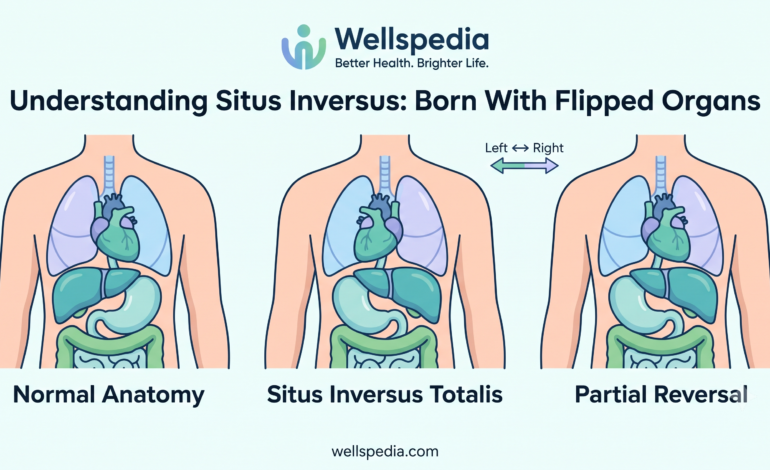
Imagine discovering that your heart, liver, stomach, and other internal organs are positioned almost like a mirror image of the usual human anatomy. This unusual arrangement is called situs inversus.
Situs inversus is a rare condition that develops before birth when the body’s internal organs form in a reversed left-to-right pattern. For many people, this unusual anatomy causes no symptoms and does not interfere with everyday life. In fact, some individuals do not discover they have situs inversus until an X-ray, ultrasound, CT scan, MRI, or surgery reveals it unexpectedly.
However, knowing about the condition is important because organ placement can affect how doctors interpret symptoms, perform examinations, and plan certain medical procedures.
In this guide, we explain what situs inversus is, why it happens, its different types, associated health conditions, diagnosis, treatment, and what it means for everyday life.
What Is Situs Inversus?
Situs inversus is a congenital condition in which the internal organs develop in an abnormal left-right arrangement.
Normally, the body’s organs follow a typical pattern known as situs solitus. For example, the heart is generally positioned on the left side, while the liver is primarily on the right.
With situs inversus, some or many organs are positioned in the opposite direction. This is why the condition is sometimes described as “mirror-image anatomy” or “flipped organs.”
The condition develops during embryonic development rather than later in life. A person is therefore born with this anatomical difference.
Importantly, situs inversus itself does not automatically mean that the organs are unhealthy. In many individuals, the organs function normally despite being positioned differently.
Types of Situs Inversus
Situs inversus can occur in different patterns depending on how extensively the organs are repositioned.
1. Situs Inversus Totalis
This is the most complete form. The major organs in the chest and abdomen are arranged as a near mirror image of normal anatomy.
When the heart is located on the right side, the condition is known as dextrocardia.
2. Partial or Incomplete Situs Inversus
In this form, only some organs are reversed. For example, abdominal organs may have an altered position while the heart remains on the left side.
This arrangement is sometimes described as situs inversus with levocardia.
3. Situs Ambiguous or Heterotaxy
Heterotaxy involves a more complex disruption of normal left-right organ arrangement. Instead of producing a consistent mirror image, organs may have unusual or mixed positions.
How Common Is Situs Inversus?
Situs inversus is considered rare. The source material estimates that it occurs in approximately 1 in 6,500 to 25,000 live births.
Many people with the condition remain unaware of it because they do not experience symptoms.
The condition is often discovered when medical imaging is performed for an unrelated reason.
What Causes Situs Inversus?
The exact reason why situs inversus develops is not completely understood.
During the earliest stages of pregnancy, complex biological signals help establish which organs should develop on the left and which should develop on the right. When this left-right patterning process is disrupted, the organs may develop in an unusual arrangement.
The Role of Genetics
Researchers have identified numerous genetic variants associated with abnormalities in body laterality.
Some of these genes are involved in the function of cilia—tiny hair-like structures found on cells. Cilia play an important role in developmental signaling, including the processes that help establish the body’s left-right orientation.
Situs inversus may sometimes occur as part of inherited genetic conditions, but many cases arise without a clear family history.
Does Situs Inversus Cause Symptoms?
For many people, situs inversus causes no symptoms at all.
The organs can continue performing their normal functions even though their positions are reversed. This means a person may live for years without knowing they have the condition.
Problems are more likely when situs inversus occurs together with another congenital or genetic condition.
Symptoms and Warning Signs of Situs Inversus
Situs inversus usually does not cause symptoms by itself. Many people discover they have the condition only after an imaging test or medical procedure.
When associated conditions are present, symptoms may include:
- Shortness of breath or unusual fatigue
- Recurrent cough or chest infections
- Frequent sinus or ear infections
- Abdominal pain or digestive problems
- Symptoms related to congenital heart defects
When to Seek Medical Attention
Seek prompt medical care for severe or unexplained abdominal or chest pain, difficulty breathing, persistent vomiting, fainting, or signs of a serious infection. Tell healthcare professionals if you have situs inversus so they can account for your reversed organ positions during diagnosis and treatment.
Health Conditions Associated With Situs Inversus
Congenital Heart Defects
Some people with situs inversus also have structural heart abnormalities present from birth.
In situs inversus totalis, the heart may be positioned on the right side while continuing to function normally. However, congenital heart defects can occur in some individuals. The risk may be particularly important in people with more complex forms of abnormal organ arrangement.
Depending on the specific heart condition, symptoms can include:
- Shortness of breath
- Poor exercise tolerance
- Bluish skin or lips
- Fatigue
- Abnormal heart rhythms
Not everyone with situs inversus will experience these problems.
Situs Inversus and Primary Ciliary Dyskinesia
Another important association is Primary Ciliary Dyskinesia (PCD).
PCD is a rare inherited condition in which cilia do not function normally. Because cilia are involved in moving mucus and other substances through the respiratory system, people with PCD may develop repeated respiratory problems.
Symptoms may include:
- Persistent cough
- Frequent chest infections
- Recurrent pneumonia
- Chronic sinus problems
- Nasal congestion
- Repeated middle-ear infections
- Breathing difficulties
When PCD occurs together with situs inversus and related findings, it may be referred to as Kartagener syndrome.
Some people with PCD may also experience fertility problems.
Other Conditions That May Occur
Depending on the specific type of organ laterality abnormality, additional structural differences may involve:
- Liver
- Spleen
- Kidneys
- Intestines
Intestinal malrotation and unusual spleen development can occur in some patients, although these findings are more commonly associated with complex laterality disorders such as heterotaxy.
How Is Situs Inversus Diagnosed?
Many people are diagnosed with situs inversus incidentally.
A doctor may discover the condition while investigating an unrelated health concern.
Common diagnostic tools include:
X-Ray
A chest X-ray may reveal that the heart is positioned on the opposite side.
Ultrasound
Ultrasound can help determine the location and structure of abdominal organs.
CT Scan
CT imaging provides detailed information about the position of organs and blood vessels.
MRI
MRI can offer detailed anatomical images without using ionizing radiation.
Physical Examination
Sometimes, a doctor may suspect an unusual heart position when listening to the chest.
During Surgery
Situs inversus can occasionally be discovered unexpectedly during an operation when organs are found in locations different from those normally expected.
Why Is Knowing About Situs Inversus Important?
For most people, the condition itself is not dangerous. However, knowing about your anatomy can be extremely important when receiving medical care.
The biggest concern is that unusual organ placement can sometimes make diagnosis more challenging.
For example, a person with situs inversus may experience pain on the left side of the abdomen from appendicitis, because the appendix can be located on the opposite side from usual. A healthcare professional who does not know about the altered anatomy could initially consider other causes of pain.
This is why patients who know they have situs inversus should tell healthcare professionals before diagnostic procedures or surgery.
Does Situs Inversus Affect Surgery?
Situs inversus does not prevent a person from undergoing surgery.
However, surgeons need to know about the altered anatomy before operating.
For example, a laparoscopic procedure involving the gallbladder may require changes in:
- Surgical approach
- Instrument positioning
- Port placement
- Surgeon positioning
Preoperative imaging can help the surgical team understand the patient’s individual anatomy and plan the safest approach.
Is There a Treatment for Situs Inversus?
Usually, situs inversus itself does not require treatment.
If the organs are functioning normally and there are no associated health problems, treatment may not be necessary.
Medical care is instead directed toward any conditions occurring alongside situs inversus, such as:
- Congenital heart disease
- Primary ciliary dyskinesia
- Intestinal abnormalities
- Other structural problems
Treatment may include medication, monitoring, surgery, or specialist care depending on the associated condition.
Living With Situs Inversus
For many individuals, situs inversus does not prevent a normal and active life.
Once the condition is identified, one of the most useful steps is to make sure your healthcare providers know about it.
Keeping a medical record that clearly states situs inversus can be especially helpful during emergency treatment.
This information allows healthcare professionals to interpret symptoms, imaging results, physical findings, and surgical anatomy more accurately.
Can People With Situs Inversus Play Sports?
In most cases, situs inversus alone does not automatically prevent participation in sports.
However, athletes should understand their individual health situation, particularly if they have an associated heart defect or another medical condition.
It can also be useful to tell coaches, trainers, and medical personnel about the condition so that unusual organ positioning is known if an injury or emergency occurs.
Can Situs Inversus Affect Pregnancy?
People with situs inversus can become pregnant.
Having situs inversus does not by itself mean that pregnancy cannot proceed normally. However, informing the obstetric and medical team is important because organ positioning may affect how imaging and physical examinations are interpreted.
If another condition, such as congenital heart disease, is present, additional monitoring may be necessary.
Can You Have Children If You Have Situs Inversus?
Situs inversus alone generally does not prevent fertility.
However, fertility may be affected when situs inversus occurs alongside Primary Ciliary Dyskinesia, because abnormal ciliary function can interfere with reproductive processes.
Anyone concerned about fertility should discuss their individual situation with an appropriate healthcare professional.
What Does Research Say About Situs Inversus?
Researchers continue to investigate how the body establishes left-right organization during early embryonic development.
Recent genetic research has identified variants in several genes associated with laterality disorders. Studies involving genes such as PKD1L1, PIFO, DAW1, DNAH9, CCDC57, and CFAP298 have contributed to a better understanding of how cilia and developmental signaling influence organ positioning.
Research in this area may eventually improve genetic testing, diagnosis, and counseling for people with abnormal organ laterality.
When Should You Tell Your Doctor About Situs Inversus?
Tell your healthcare provider if you know or suspect that you have situs inversus, especially before:
- Surgery
- Emergency treatment
- Abdominal procedures
- Cardiac testing
- Diagnostic imaging
- Pregnancy-related medical care
Providing this information can help doctors interpret your anatomy correctly and avoid confusion during diagnosis or treatment.
Final Takeaway
Situs inversus is a rare congenital condition in which the internal organs develop in a reversed or mirror-image arrangement.
Although the idea of having “flipped organs” may sound frightening, many people with situs inversus have no symptoms and live healthy, normal lives.
The condition becomes more medically significant when it occurs alongside congenital heart defects, primary ciliary dyskinesia, intestinal abnormalities, or other developmental conditions.
There is usually no treatment required for situs inversus itself. The most important step is knowing about your anatomy and making sure your healthcare team knows about it, particularly before surgery or when unusual symptoms develop.
As research continues, scientists are gaining a clearer understanding of the genetic and developmental mechanisms responsible for left-right organ positioning.
Frequently Asked Questions About Situs Inversus
Is situs inversus dangerous?
Situs inversus itself is often harmless. However, some people have associated heart, respiratory, intestinal, or other abnormalities that may require medical care.
Can someone live a normal life with situs inversus?
Yes. Many people with situs inversus have normal organ function and live healthy, active lives.
Is situs inversus genetic?
Genetic factors can contribute to situs inversus and other laterality disorders, but the condition does not always follow a straightforward inherited pattern.
What is situs inversus totalis?
Situs inversus totalis is a form in which the major internal organs are arranged in an almost complete mirror image of their usual positions.
What is dextrocardia?
Dextrocardia means that the heart is positioned on the right side of the chest rather than its usual left-sided position. It can occur with situs inversus.
Can situs inversus affect the heart?
Yes. Some people with situs inversus also have congenital heart defects, although many have a structurally normal heart despite its unusual position.
Can situs inversus cause left-sided appendicitis pain?
Yes. When the appendix is located on the opposite side because of reversed anatomy, appendicitis may cause pain on the left rather than the usual right side.
Does situs inversus require treatment?
Situs inversus itself generally does not require treatment when the organs function normally. Treatment is directed toward any associated medical conditions.
Can people with situs inversus have children?
Yes. Situs inversus alone generally does not prevent having children. Fertility problems may occur when it is associated with conditions such as primary ciliary dyskinesia.
Should you tell your doctor if you have situs inversus?
Yes. Healthcare professionals should know about situs inversus because reversed organ positioning can affect diagnosis, imaging interpretation, and surgical planning.
Medical Disclaimer: This article is intended for general health education and should not replace professional medical advice, diagnosis, or treatment. If you have unusual or severe symptoms, consult a qualified healthcare professional.