Medically Induced Coma: What It Is, Why Doctors Use It, and What Recovery Looks Like
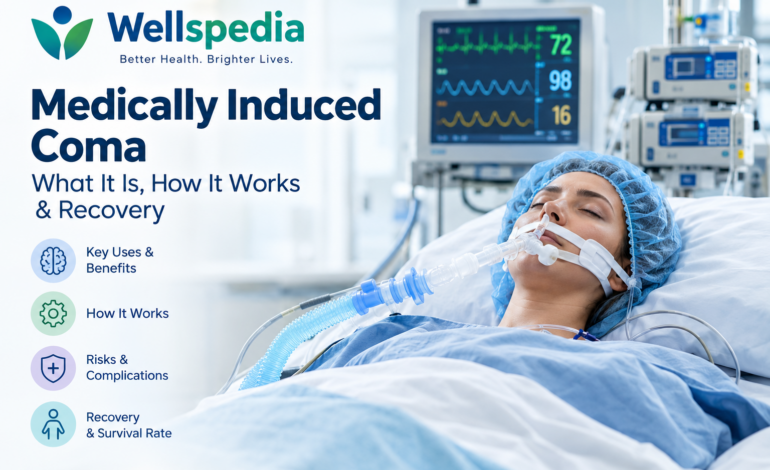
A medically induced coma is a carefully controlled state of deep unconsciousness produced with medication in an intensive care unit (ICU). Doctors may use this approach when a patient has a serious neurological condition, seizures that do not respond to standard treatment, or another critical illness requiring deep sedation and intensive monitoring.
Although the term can sound frightening, a medically induced coma is different from a coma caused by an injury or disease. Medical teams use specific medications to control the patient’s level of consciousness and can gradually reduce them when it is appropriate to do so. However, waking up and recovering depend largely on the underlying illness, the extent of any brain injury, and the patient’s response to treatment.
This guide explains what a medically induced coma involves, why doctors may recommend it, how long it can last, possible complications, and what families can expect during recovery.
Key Takeaways
- A medically induced coma is a medication-controlled state of deep unconsciousness used in selected critical-care situations.
- Doctors may consider it for persistent seizures, severe brain swelling that does not respond to other treatments, or certain situations requiring intensive respiratory support.
- Patients generally need continuous monitoring and may require a mechanical ventilator.
- The time needed to wake up varies according to the medication, treatment duration, organ function, and underlying condition.
- Confusion, muscle weakness, delirium, infections, and other complications may occur during critical illness and recovery.
- There is no single survival rate or recovery timeline that applies to everyone placed in a medically induced coma.
What Is a Medically Induced Coma?
A medically induced coma is a state of profound unconsciousness created by administering medications that suppress activity in the central nervous system. Doctors carefully adjust these medicines according to the patient’s condition and treatment goals.
Unlike a coma caused directly by brain damage, this state is intentionally produced and maintained by the medical team. It may help clinicians control certain dangerous neurological processes, particularly seizures that continue despite treatment or dangerously elevated pressure inside the skull.
The goal is not simply to make someone unconscious. Instead, clinicians use deep sedation or anesthetic medication when they believe it may help control a life-threatening problem while other treatments take effect.
A medically induced coma requires close supervision, usually in an ICU. Depending on the medication and depth of sedation, the patient may be unable to breathe adequately without assistance and may need a ventilator.
Important: An induced coma does not repair existing brain damage or guarantee a good outcome. Its benefits depend on the medical reason for using it.
Medically Induced Coma vs. Other States of Consciousness
Several medical conditions can cause a person to become unresponsive. However, they are not interchangeable, and doctors use different assessments to distinguish them.
1. Natural or Spontaneous Coma
A spontaneous coma develops because of an underlying medical problem rather than medication deliberately administered to produce unconsciousness.
Possible causes include severe traumatic brain injury, stroke, oxygen deprivation, infections affecting the brain, metabolic disturbances, and poisoning.
Doctors investigate and treat the underlying cause. They may also use sedatives in some cases to support ventilation, control agitation, manage seizures, or help treat increased intracranial pressure.
2. Sedation
Sedation describes a range of medication effects, from mild relaxation to profound unresponsiveness.
A lightly sedated patient may respond to conversation or simple instructions. A deeply sedated patient may not respond even to repeated stimulation.
A medically induced coma generally involves a deeper and more sustained level of medication-induced unconsciousness than routine sedation. The distinction depends on the clinical situation rather than a single universally applicable medication dose.
3. General Anesthesia
General anesthesia is most commonly used during surgery to prevent awareness and enable procedures to take place safely. Anesthesiologists continuously monitor breathing, circulation, and anesthetic depth.
Some of the medications used in general anesthesia overlap with those used to produce deep sedation in intensive care. However, surgical anesthesia and an induced coma have different purposes, treatment settings, and monitoring requirements.
4. Unresponsive Wakefulness Syndrome
Unresponsive wakefulness syndrome, previously called the vegetative state, is a disorder of consciousness in which a person shows periods of wakefulness, such as opening their eyes, but no clear, reproducible evidence of conscious awareness.
This condition differs from a medication-induced coma. Doctors assess the patient’s neurological responses over time and consider the effects of sedatives and other medicines before drawing conclusions about awareness.
5. Brain Death
Brain death is the permanent loss of all functions of the brain, including the brainstem, established according to applicable medical and legal criteria.
It is not the same as a medically induced coma. Sedative medications can temporarily suppress responsiveness, so clinicians must account for medication effects and other confounding factors when determining whether brain-death criteria can be assessed.
A medically induced coma is intended to be reversible by adjusting or stopping the medication. Brain death, once validly established, is permanent.
Why Would a Doctor Induce a Coma?
Doctors do not use an induced coma routinely for every critically ill or unconscious patient. They consider it when a specific medical problem may benefit from profound, closely controlled suppression of nervous system activity.
1. Severe Traumatic Brain Injury
A serious head injury can cause bleeding, swelling, or increased pressure inside the skull. Excessive intracranial pressure can threaten blood flow to the brain and contribute to additional injury.
Treatment may include surgery, measures to control swelling, pain management, ventilation adjustments, and other forms of intensive care.
In selected patients whose intracranial pressure remains dangerously high despite other measures, doctors may use deep sedation or anesthetic medications to reduce brain activity and help control the pressure.
The treatment requires careful monitoring because these medications can also lower blood pressure, potentially reducing blood flow to the brain.
2. Status Epilepticus
Status epilepticus is a medical emergency involving prolonged seizure activity or repeated seizures without recovery between them. A seizure lasting five minutes or longer is generally treated as an emergency.
Most seizures are treated with anti-seizure medications. If seizure activity continues despite appropriate initial and subsequent treatment, the condition may be classified as refractory status epilepticus.
In severe cases, specialists may use continuous intravenous anesthetic medication to suppress seizures. An electroencephalogram (EEG), which records electrical activity in the brain, can help the medical team assess whether seizure activity continues and whether treatment is working.
The duration of treatment depends on seizure control, the underlying cause, and the patient’s overall condition.
3. After Cardiac Arrest
Cardiac arrest stops effective blood circulation and can deprive the brain of oxygen. Even after the heart starts beating again, a patient may remain unconscious because of the effects of oxygen deprivation and the critical illness that caused the arrest.
Some patients require sedation for mechanical ventilation, procedures, or other intensive-care treatments. Temperature management may also be used in selected post-cardiac-arrest patients according to clinical protocols.
However, a medically induced coma is not automatically required after every cardiac arrest. Sedation and temperature management are separate interventions, and their use depends on the patient’s condition and current clinical guidance.
4. Severe Respiratory Illness
People with severe respiratory failure may need a ventilator to help them breathe. Sedation can improve comfort and help patients tolerate the breathing tube and ventilator.
Deep sedation is sometimes necessary in particular circumstances, such as when a patient cannot safely tolerate essential ventilation strategies. Nevertheless, routine deep sedation or a medically induced coma is not required for every patient receiving mechanical ventilation.
Clinicians generally aim to use the lightest level of sedation that safely meets the patient’s needs.
5. Selected Pediatric Emergencies
Children may also receive deep sedation or anesthetic treatment for life-threatening neurological conditions, including refractory seizures and certain cases of severe traumatic brain injury.
Treatment decisions require particular care because children differ from adults in their physiology, medication responses, and developmental needs.
Doctors weigh the potential benefits against complications such as low blood pressure, infection, and prolonged ventilator use. The treatment plan depends on the child’s age, underlying illness, response to previous treatments, and specialist assessment.
Is a Medically Induced Coma Used to Treat Rabies?
A medically induced coma was included in some experimental treatment approaches for rabies, including the approach commonly known as the Milwaukee protocol. However, this approach has not demonstrated reliable effectiveness and is not an established cure for rabies.
Suspected rabies exposure requires urgent medical assessment. Appropriate wound care and recommended rabies post-exposure prophylaxis should not be delayed while considering unproven treatments.
How Does a Medically Induced Coma Work?
The medical team selects medications and a treatment target based on the problem they are trying to control.
Step 1: Assess the Patient
Before treatment, clinicians evaluate the patient’s neurological condition, breathing, circulation, laboratory results, and the cause of the critical illness.
They also consider whether other interventions can address the problem without deep sedation.
Step 2: Administer Medication
Depending on the situation, doctors may use medications such as propofol, midazolam, or barbiturates. The choice depends on the treatment objective, the patient’s medical history, organ function, and potential adverse effects.
These drugs affect brain signaling and can reduce consciousness. Some also suppress seizure activity and decrease the brain’s metabolic demand.
Step 3: Provide Intensive Monitoring
Patients receiving deep sedation or anesthetic coma therapy require continuous monitoring. Depending on their condition, the team may track:
- Heart rate, blood pressure, and oxygen levels.
- Breathing and ventilator requirements.
- Neurological responses and pupil reactions.
- Medication effects and potential adverse reactions.
- EEG activity when seizure control or brain activity monitoring requires it.
- Intracranial pressure when clinically indicated.
The team adjusts treatment according to the patient’s response and the goals of care.
Step 4: Treat the Underlying Problem
Sedation is only one part of treatment. Doctors also address the cause of the emergency, such as controlling seizures, treating infection, managing brain swelling, supporting circulation, or treating respiratory failure.
Step 5: Reduce Medication When Appropriate
When the original problem is sufficiently controlled, clinicians may gradually reduce or stop the medications. They then assess neurological responses and watch for signs of complications.
The timing depends on the patient’s stability and treatment needs. Reducing sedation too early may be unsafe in some situations, while continuing it unnecessarily can increase certain risks.
Does a Person in a Medically Induced Coma Need a Ventilator?
Many patients receiving a prolonged, deep anesthetic coma require mechanical ventilation because the medications can suppress breathing and reduce the body’s ability to protect the airway.
A ventilator moves air into and out of the lungs through a breathing tube, usually inserted through the mouth into the windpipe.
The medical team monitors oxygen levels, carbon dioxide, lung function, and other indicators to adjust respiratory support.
Not every person receiving sedation requires the same level of breathing assistance. The decision depends on the medication, the depth of sedation, the patient’s breathing, and the underlying illness.
How Long Does a Medically Induced Coma Last?
There is no fixed duration for an induced coma. Some patients need deep sedation for a relatively short period, while others require several days or longer because of the condition being treated.
The duration may depend on:
- The reason for treatment: Persistent seizures and severe intracranial pressure problems require different approaches.
- Response to medication: Doctors assess whether the treatment is controlling the underlying problem.
- The patient’s overall health: Kidney or liver dysfunction can affect how certain medications are processed.
- Complications: Infection, unstable blood pressure, or respiratory problems may influence treatment decisions.
- The safety of reducing sedation: Clinicians must consider whether the original condition could worsen when medication is reduced.
For refractory status epilepticus, anesthetic treatment may continue for approximately 24–48 hours after seizure control in some treatment protocols, although the exact duration varies.
In severe brain injury, the need for deep sedation depends on neurological monitoring and whether dangerous intracranial pressure persists.
These examples are not personal predictions. Only the treating medical team can explain why a particular patient needs continued sedation and what milestones must be reached before reducing it.
What Happens When a Patient Wakes Up?
Recovery from a medically induced coma is not always immediate. Some patients begin responding relatively soon after medication is reduced, while others remain drowsy or unresponsive for longer.
The process varies according to the drugs used, how long they were administered, organ function, the underlying illness, and any neurological injury.
1. Early Responses
As medication effects decrease, the patient may begin opening their eyes, moving, or responding to simple instructions.
Responses may initially be inconsistent. Doctors assess these changes alongside other neurological findings rather than relying on one movement or reaction.
2. Confusion and Delirium
Some patients experience delirium during or after critical illness. They may appear confused, become restless, have difficulty recognizing familiar people, or struggle to understand where they are.
Delirium can fluctuate throughout the day. Contributing factors may include infection, medication effects, disrupted sleep, metabolic abnormalities, pain, and the underlying illness.
The healthcare team looks for treatable causes and uses appropriate measures to support orientation and safety.
3. Gradual Return of Awareness
As the patient becomes more alert, they may begin communicating, following instructions, and interacting with family members.
However, alertness does not necessarily mean that memory, concentration, movement, or judgment have returned to their previous levels.
Recovery can involve gradual improvements over days, weeks, or months, depending on the patient’s condition.
4. Rehabilitation and Longer-Term Recovery
Some patients need rehabilitation to regain strength, balance, speech, swallowing, memory, or everyday skills.
Depending on their needs, rehabilitation may include physiotherapy, occupational therapy, speech and language therapy, and cognitive support.
Not everyone experiences all these difficulties. The rehabilitation plan should be based on a professional assessment of the patient’s abilities and goals.
Side Effects and Complications of a Medically Induced Coma
An induced coma can be necessary in life-threatening situations, but the treatment and the underlying critical illness carry risks.
Low Blood Pressure
Some anesthetic medications can lower blood pressure. If blood pressure becomes too low, the team may need to adjust medication or provide fluids and other treatments to support circulation.
Infections
Patients who need prolonged ventilation or invasive medical devices may have a greater risk of infections, including ventilator-associated pneumonia and bloodstream infections.
Preventive measures and close monitoring help the team identify and treat infections promptly.
Delirium and Cognitive Changes
Critical illness, sleep disruption, medication exposure, and neurological injury can contribute to delirium or difficulties with memory and attention.
Some symptoms improve as the patient recovers. Persistent problems may require further assessment and rehabilitation.
Muscle Weakness
Prolonged immobility and severe illness can lead to muscle loss and weakness. Some patients need assistance with sitting, standing, walking, and daily activities after leaving intensive care.
Early mobility and rehabilitation are introduced when the clinical team considers them safe.
Delayed Awakening
A patient may remain drowsy or unresponsive after sedatives are reduced. Possible explanations include lingering medication effects, impaired drug clearance, metabolic problems, seizures, or the underlying brain injury.
Doctors investigate the likely cause rather than assuming that delayed awakening has one explanation.
Seizure Recurrence
In patients treated for refractory seizures, seizure activity may return when anesthetic medication is reduced. EEG monitoring and continued anti-seizure treatment may be necessary.
Medication-Related Toxicity
Certain medications can cause serious complications, particularly when given at high doses or for prolonged periods.
For example, prolonged high-dose propofol infusion can rarely cause propofol infusion syndrome, a potentially life-threatening condition involving problems such as metabolic acidosis, muscle breakdown, and cardiovascular instability.
The medical team selects medication and dosing strategies carefully and monitors for adverse effects.
Can a Medically Induced Coma Cause Permanent Brain Damage?
A medically induced coma is not, by itself, proof that permanent brain damage has occurred. It is a treatment state produced with medication.
However, the illness that makes the treatment necessary may cause brain injury. Examples include severe head trauma, prolonged oxygen deprivation after cardiac arrest, stroke, or persistent seizure activity.
Other factors, including complications during critical illness, may also affect neurological recovery.
Doctors assess prognosis using multiple sources of information, which may include neurological examinations, brain imaging, EEG findings, laboratory results, and the patient’s progress over time.
Sedative medication can interfere with neurological assessment. For that reason, clinicians account for medication effects and other confounding factors before making conclusions about recovery.
What Is the Survival Rate After a Medically Induced Coma?
There is no single survival rate for patients placed in a medically induced coma because the treatment is used for very different medical conditions.
A patient receiving anesthetic treatment for refractory seizures may have a different prognosis from someone with severe traumatic brain injury or prolonged oxygen deprivation after cardiac arrest.
Survival and functional recovery may depend on:
- The cause and severity of the original illness or injury.
- The amount of brain damage, if any, that occurred.
- How quickly treatment began.
- The patient’s response to treatment.
- The development of infections or other complications.
- The patient’s overall health and pre-existing medical conditions.
Statistics from one study should not be applied automatically to an individual patient. Research findings also vary according to the population studied, treatment protocols, and how researchers define a favorable outcome.
Families should ask the treating team to explain what is known about the patient’s condition, which findings remain uncertain, and when a more reliable prognosis may be possible.
How Can Families Support a Patient’s Recovery?
Families can play an important supportive role during intensive care and rehabilitation. They should coordinate their involvement with the healthcare team and follow hospital policies.
Helpful steps may include:
- Speak calmly: Use the patient’s name and offer reassuring words when visits are permitted.
- Share familiar information: Briefly discuss familiar people, places, or everyday events if the care team considers this appropriate.
- Ask before touching: Check with staff before adjusting the patient’s position or handling medical equipment.
- Protect rest: Follow visiting guidance and avoid unnecessary stimulation when the patient needs sleep.
- Learn about rehabilitation: Ask which therapies may be useful as the patient’s condition stabilizes.
- Take care of yourself: Families may benefit from regular rest, support from relatives, and clear updates from the medical team.
Talking to a deeply sedated patient may provide comfort to family members and may be appropriate when permitted by staff. However, it does not guarantee that the patient can consciously hear, understand, or remember the conversation.
Frequently Asked Questions
Can a person hear while in a medically induced coma?
Some brain responses to sound may remain detectable during deep sedation or general anesthesia. However, a measurable response does not prove conscious hearing or understanding. Experiences vary, and many patients cannot later recall what occurred during treatment.
Can a person dream during an induced coma?
Some patients report dreams, unusual perceptions, or fragmented memories after intensive care. These experiences may be related to dreaming, delirium, medication effects, or memories formed before or during periods of lighter sedation. It is not possible to determine exactly what every unconscious patient experiences.
How long does it take to wake up after sedation stops?
Some patients become more responsive within hours, while others take days or longer. The timing depends on the medication, duration of treatment, kidney and liver function, other medicines, and the underlying illness or injury.
Can a patient recover fully after a medically induced coma?
Yes, full recovery is possible for some patients, but it is not guaranteed. Outcomes depend mainly on the reason for treatment, the severity of the illness, any brain injury, and complications. Some people need extensive rehabilitation or experience lasting difficulties.
Can a person in an induced coma breathe independently?
Some patients can breathe without assistance, but many people receiving a prolonged, deep anesthetic coma need a ventilator. The need for respiratory support depends on medication effects, breathing function, airway protection, and the underlying illness.
Why might a doctor consider a tracheostomy?
If a patient requires prolonged mechanical ventilation, doctors may consider a tracheostomy, which creates an opening in the neck into the windpipe for a breathing tube. It may help with longer-term airway management in selected patients. It is not necessary for everyone who receives deep sedation.
What if a patient does not wake up as expected?
Doctors assess possible causes, including lingering medication effects, impaired drug clearance, metabolic abnormalities, ongoing seizures, and brain injury. They may use neurological examinations, laboratory testing, EEG, or imaging as appropriate. A delay does not automatically establish the long-term outcome.
Can someone die while in a medically induced coma?
Yes. Patients who need this treatment are often critically ill or have severe injuries. Death can occur because of the underlying condition or complications during intensive care. The outcome depends on the individual circumstances, and the fact that a patient received an induced coma does not by itself establish the cause of death.
Is a medically induced coma the same as brain death?
No. A medically induced coma is produced by medication and may be reversible when treatment is reduced or stopped. Brain death is the permanent loss of all brain function, including brainstem function, established through the required medical criteria.
When Should You Seek Medical Help?
A medically induced coma is an intensive-care treatment, not a condition that can be managed at home.
Seek emergency medical assistance for warning signs such as:
- A seizure lasting five minutes or longer, or repeated seizures without recovery.
- Sudden loss of consciousness or inability to wake someone.
- Severe head injury followed by confusion, repeated vomiting, or unusual drowsiness.
- Serious breathing difficulty or signs of cardiac arrest.
Do not wait for symptoms to resolve when a life-threatening emergency is suspected.
If a loved one is already receiving intensive care, ask the treating team to explain the purpose of sedation, the treatment goals, the monitoring results, and the signs they are watching for before reducing medication.
Related Articles
Continue exploring these Wellspedia guides to learn more about blood pressure and heart health.
- High Blood Pressure: Causes, Symptoms and Management — Understand high blood pressure, common risk factors, potential complications, and ways to manage it with professional guidance.
- Silent Heart Attack Symptoms: Can a Heart Attack Go Unnoticed? — Learn why some heart attacks cause subtle or unrecognized symptoms and why prompt medical assessment matters.
Conclusion
A medically induced coma is a specialized intensive-care intervention used in selected situations where deep medication-induced unconsciousness may help control a dangerous medical problem. Doctors may consider it for persistent seizures, severe intracranial pressure, or certain circumstances requiring intensive respiratory support.
Treatment involves careful medication selection, continuous monitoring, and management of the underlying illness. Waking up may occur gradually, and some patients need rehabilitation to regain strength, communication, memory, or everyday skills.
The most important point is that an induced coma does not determine a patient’s outcome on its own. The underlying condition, any brain injury, treatment response, and complications all influence recovery. The treating medical team is best placed to explain an individual patient’s prognosis.
Medical disclaimer: This article is for general educational purposes only. It does not replace professional medical advice, diagnosis, or treatment. If a medical emergency is suspected, contact local emergency services immediately.
Editorial and medical review: Add the actual author’s name, the publication or update date, and the name and qualifications of a qualified medical reviewer after review has been completed. Do not claim medical review before it has taken place.