Basal Ganglia Stroke: Symptoms, Causes, Treatment & Recovery
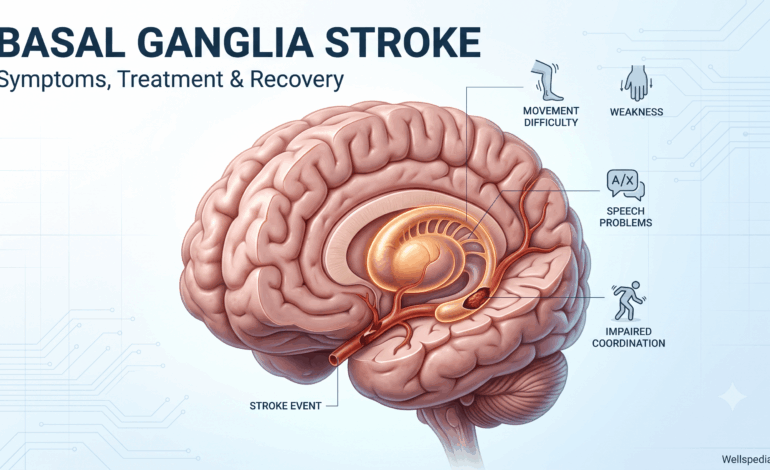
A basal ganglia stroke occurs when a blood vessel supplying the basal ganglia becomes blocked or ruptures, causing damage to these deep brain structures. The basal ganglia help regulate movement and are also involved in learning, motivation, and other brain functions.
A basal ganglia stroke may be ischaemic, caused by a blockage, or haemorrhagic, caused by bleeding. Symptoms can include weakness or numbness, difficulty speaking, facial weakness, problems with movement or coordination, and other neurological changes depending on the area affected.
Because stroke is a medical emergency, sudden symptoms require immediate emergency medical evaluation.
What Is a Basal Ganglia Stroke
The basal ganglia are a group of structures located deep within the brain that help regulate movement and other important brain functions. A stroke affecting this region can occur because of either an interrupted blood supply or bleeding in the brain.
Main Components Include:
-
Striatum: Processes incoming signals; includes the caudate nucleus and putamen
-
Globus Pallidus: Helps regulate movement
-
Substantia Nigra: Involved in movement and reward pathways
-
Subthalamic Nucleus: Supports motor control
Functions of the Basal Ganglia
These brain structures are essential for several key functions:
-
Movement Control: Ensures smooth, coordinated motion
-
Action Selection: Filters and prioritizes movements
-
Habit Formation: Helps automate repetitive behaviors
-
Motivation & Reward: Influences goal-oriented actions
-
Cognitive Processing: Supports decision-making and planning
Damage to this region can disrupt all of these functions.
Types of Basal Ganglia Stroke
1. Hemorrhagic Stroke
This occurs when a blood vessel in the brain bursts, causing bleeding that damages surrounding tissue.
Common causes:
-
Chronic high blood pressure
-
Weak or abnormal blood vessels
-
Aneurysms or arteriovenous malformations (AVMs)
-
Blood clotting disorders
2. Ischemic Stroke
The most common type, caused by a blockage in blood vessels supplying the brain.
Key causes:
-
Blood clots (thrombosis or embolism)
-
Narrowed arteries (atherosclerosis)
-
Small vessel disease
Small-vessel disease can cause lacunar infarcts involving the basal ganglia.
Risk Factors
Several conditions increase the likelihood of a basal ganglia stroke:
-
High blood pressure
-
Diabetes
-
High cholesterol
-
Smoking
-
Heart disease or irregular heartbeat
-
Blood vessel abnormalities
What Causes a Basal Ganglia Stroke?
A basal ganglia stroke can result from either a blocked blood vessel or bleeding from a ruptured blood vessel. Ischemic strokes may be related to small-vessel disease, atherosclerosis, or blood clots, while haemorrhagic strokes are often associated with uncontrolled high blood pressure and other blood-vessel abnormalities.
-
High blood pressure
-
Diabetes
-
High cholesterol
-
Smoking
-
Heart disease
-
Irregular heartbeat
-
Blood vessel abnormalities
Basal Ganglia Stroke Symptoms
Symptoms may differ slightly from typical stroke signs due to the region affected.
Common Symptoms:
-
Weakness on one side of the body
-
Slurred or unclear speech
-
Facial drooping
Distinctive Symptoms:
-
Tremors or muscle stiffness
-
Slow movement (bradykinesia)
-
Involuntary movements
-
Difficulty walking or balancing
-
Mood changes (apathy, emotional flatness)
-
Memory and concentration problems
Right Basal Ganglia Stroke: Symptoms and Effects
A right basal ganglia stroke can affect movement and other neurological functions, but the symptoms vary depending on the exact structures and pathways involved. Because the brain’s motor pathways generally control the opposite side of the body, a right-sided brain injury may cause weakness or coordination problems mainly on the left side.
Possible effects may include:
-
Weakness or numbness on the left side
-
Facial weakness
-
Difficulty with walking or coordination
-
Speech or communication changes
-
Changes in movement control
-
Cognitive or emotional changes
The exact symptoms depend on the size and location of the stroke and whether other nearby brain structures are affected.
Basal Ganglia Stroke Deficits
The long-term effects of a basal ganglia stroke vary from person to person. Depending on the location and severity of the injury, possible deficits may include movement difficulties, weakness, balance problems, speech or communication difficulties, cognitive changes, and emotional or behavioral changes.
-
Movement and coordination problems
-
Muscle stiffness or abnormal movements
-
Weakness or numbness
-
Speech or communication difficulties
-
Problems with balance and walking
-
Cognitive difficulties
- Emotional or behavioral changes.
When to Seek Emergency Help
Stroke symptoms can appear suddenly and require emergency medical attention. The American Stroke Association recommends using B.E. F.A.S.T. to recognize warning signs:
-
B – Balance: Sudden loss of balance or coordination
-
E – Eyes: Sudden vision changes
-
F – Face: Facial drooping or numbness
-
A – Arm: Sudden weakness or numbness
-
S – Speech: Slurred speech or difficulty speaking
-
T – Time: Call emergency services immediately
How Is a Basal Ganglia Stroke Diagnosed?
Doctors may use a neurological examination along with brain imaging and other tests to determine whether a stroke has occurred and whether it is ischemic or hemorrhagic.
Common tests may include:
-
CT scan: Often used urgently to identify bleeding and other acute changes.
-
MRI: Provides detailed images of brain tissue and can help identify ischemic injury.
-
Blood tests: May help identify factors that affect treatment.
-
Heart tests: ECG or other cardiac evaluation may be used when a heart-related source of a clot is suspected.
Basal Ganglia Stroke Treatment
Treatment depends on whether the stroke is ischemic or hemorrhagic, how severe it is, when symptoms began, and what brain imaging shows.
Ischemic Stroke Treatment
For eligible patients, treatment may include intravenous thrombolysis and, in selected cases, endovascular thrombectomy to restore blood flow.
The 2026 American Heart Association/American Stroke Association guideline supports either alteplase or tenecteplase within the appropriate 4.5-hour thrombolysis window for eligible patients and provides updated recommendations for endovascular thrombectomy in selected patients.
Hemorrhagic Stroke Treatment
Treatment may include:
-
Careful blood pressure management
-
Management of bleeding and increased pressure in the brain when present
-
Reversal of certain blood-thinning medications when appropriate
-
Neurosurgical or other specialist treatment in selected cases
Hospital Care
Patients may require close monitoring, neurological assessment, and supportive treatment in a hospital or stroke unit.
Basal Ganglia Stroke Recovery
Recovery varies considerably between individuals. Rehabilitation focuses on improving movement, communication, thinking, and independence and may begin once the patient is medically stable.
Rehabilitation Therapies:
-
Physical Therapy: Improves movement and strength
-
Occupational Therapy: Helps regain daily life skills
-
Speech Therapy: Addresses communication issues
-
Cognitive Therapy: Supports memory and thinking
Nutrition After a Basal Ganglia Stroke
A balanced diet can be part of long-term stroke recovery and prevention. Nutrition plans should be individualized, especially for people with diabetes, high blood pressure, high cholesterol, or swallowing difficulties.
A healthcare professional or registered dietitian may help with:
-
A balanced, nutrient-rich diet
-
Blood pressure management
-
Blood sugar control
-
Cholesterol management
-
Adequate nutrition during recovery
-
Safe food and fluid intake when swallowing problems are present
Do not start supplements specifically for stroke recovery without discussing them with a healthcare professional.
Basal Ganglia Stroke Prognosis and Long-Term Outlook
Prognosis after a basal ganglia stroke varies widely. Recovery depends on factors such as the type and severity of the stroke, the size and location of the brain injury, how quickly treatment was provided, overall health, and access to rehabilitation
-
Severity and location
-
Age and overall health
-
Speed of medical intervention
-
Access to rehabilitation
Latest Advances in Stroke Treatment
Research continues to improve stroke care and recovery:
-
Neuroprotective medications
-
Brain stimulation therapies (like TMS)
-
Minimally invasive clot removal techniques
-
Stem cell therapy (experimental)
-
AI-assisted rehabilitation tools
How to Reduce the Risk of Another Stroke
-
Control blood pressure
-
Manage diabetes
-
Manage cholesterol
-
Stop smoking
-
Follow prescribed medications
-
Maintain appropriate physical activity
-
Attend follow-up appointments
-
Follow the treatment plan recommended by your healthcare team
Frequently Asked Questions
What is a basal ganglia stroke?
A basal ganglia stroke occurs when a blood vessel supplying the basal ganglia becomes blocked or ruptures. It can affect movement and other neurological functions depending on the location and severity of the injury.
What are the symptoms of a basal ganglia stroke?
Symptoms may include weakness or numbness, facial weakness, speech difficulties, movement problems, balance issues, and other neurological changes. Symptoms vary depending on the area affected.
What is a right basal ganglia infarct?
A right basal ganglia infarct is an ischemic stroke affecting the right side of the basal ganglia. It may cause weakness or coordination problems mainly on the left side of the body, although symptoms vary depending on the exact area affected.
Can a basal ganglia stroke affect one side of the body?
Yes. A basal ganglia stroke can cause weakness, numbness, or movement problems on one side of the body. The side and severity depend on which brain structures and pathways are affected.
How long does basal ganglia stroke recovery take?
Recovery time varies widely. Some people improve over weeks or months, while others may have longer-term effects. Rehabilitation and the severity and location of the stroke can influence recovery.
What is the prognosis after a basal ganglia stroke?
Prognosis varies depending on the type and severity of the stroke, the area affected, how quickly treatment begins, overall health, and rehabilitation.
Can you fully recover from a basal ganglia stroke?
Some people recover significantly, while others experience lasting difficulties. Early treatment and appropriate rehabilitation can help maximize recovery and independence.
Conclusion
A basal ganglia stroke requires urgent medical evaluation and appropriate treatment. Recovery varies from person to person and depends on the type and severity of the stroke, the area of brain affected, how quickly treatment begins, and access to rehabilitation. With appropriate medical care, rehabilitation, and long-term risk-factor management, many stroke survivors can improve their function and independence.