Erythema Toxicum Neonatorum: Symptoms, Causes & Treatment
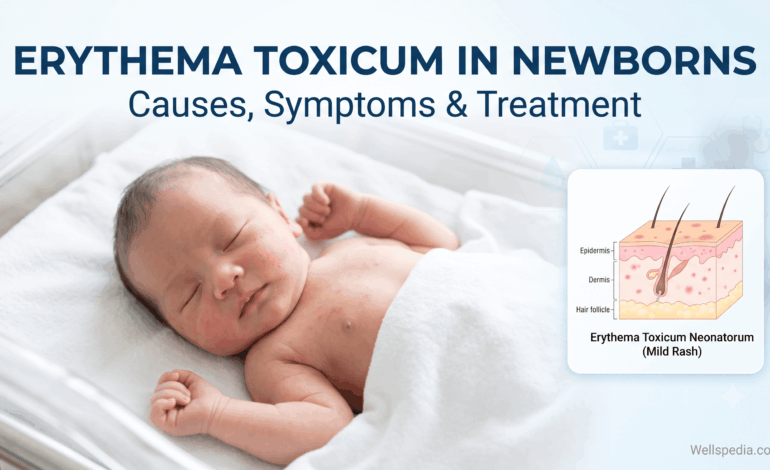
Erythema toxicum neonatorum (ETN) is a common and usually harmless skin rash that affects newborn babies. It often appears during the first few days after birth as small red or pink patches, bumps, or spots. The rash may come and go and can look different depending on a baby’s skin tone.
Although the appearance can be alarming to new parents, erythema toxicum usually does not require treatment and clears on its own.
Important: A newborn with a rash should be assessed promptly if the baby appears unwell, has breathing problems, develops a fever, or the rash looks like bruising or does not fade when pressed.
What Is Erythema Toxicum Neonatorum?
Erythema toxicum neonatorum, also called erythema toxicum or toxic erythema of the newborn, is a benign skin condition seen mainly during the newborn period.
It commonly develops within the first few days after birth, although it can appear later during the first couple of weeks. The rash may disappear from one area and appear somewhere else.
Despite its name, erythema toxicum is not caused by a toxin and is not generally considered dangerous or contagious.
What Does Erythema Toxicum Look Like?
Erythema toxicum can appear as:
-
Red or pink patches
-
Small raised bumps
-
Tiny yellowish or white spots in the center of some lesions
-
Spots surrounded by reddish skin
-
A rash that disappears and reappears
It commonly affects the:
-
Face
-
Chest and abdomen
-
Upper arms
-
Thighs
The rash can be more difficult to recognize on darker skin tones, so changes in texture and the appearance of the spots may be more noticeable than redness alone.
Erythema Toxicum Symptoms
The main symptom is the characteristic skin rash. Most babies with erythema toxicum otherwise appear well.
Possible features include:
-
Red or pink spots
-
Small raised bumps
-
Mildly inflamed areas around the spots
-
Rash appearing in different areas over time
-
No significant discomfort in most babies
Erythema toxicum does not usually cause a baby to become seriously ill. If your newborn has a rash together with fever, breathing difficulty, poor feeding, unusual sleepiness, or other signs of illness, medical assessment is important.
When Does Erythema Toxicum Appear?
Erythema toxicum most often develops during the first few days after birth. Some babies may develop it later, including during the first two weeks of life.
Because newborn skin changes quickly, parents may notice that the rash looks different from one day to the next.
What Causes Erythema Toxicum?
The exact cause of erythema toxicum is not fully understood.
It is thought to involve a temporary inflammatory response in the newborn’s skin and immune system. It is not caused by poor hygiene, dirty skin, or an infection.
The condition is common in newborns, particularly in full-term babies.
Is Erythema Toxicum Contagious?
No. Erythema toxicum is not considered contagious.
Parents do not need to isolate the baby because of this rash. It is a temporary newborn skin condition rather than an infection that spreads from person to person.
How Long Does Erythema Toxicum Last?
Erythema toxicum is temporary. The rash can come and go before gradually disappearing.
In most babies, it improves within a few days to a few weeks without treatment.
If the rash persists, becomes worse, develops unusual features, or your baby becomes unwell, speak with a healthcare professional.
Erythema Toxicum Treatment
Does erythema toxicum need treatment?
Usually, no specific treatment is necessary.
Because erythema toxicum generally resolves naturally, parents should avoid trying to remove or treat the spots with unnecessary medications or harsh skin products.
Helpful newborn skin care
You can generally:
-
Keep your baby’s skin clean and dry.
-
Use gentle, fragrance-free products when needed.
-
Avoid squeezing or scratching the spots.
-
Avoid applying medicated creams unless recommended by a healthcare professional.
-
Follow your pediatrician’s advice about bathing and newborn skin care.
Do not use steroid, antibiotic, antifungal, or other medicated creams on the rash unless a healthcare professional recommends them.
Erythema Toxicum vs Other Newborn Rashes
Several newborn skin conditions can look similar to erythema toxicum.
Erythema Toxicum
Usually appears as red or pink patches with small raised spots. It often comes and goes and generally resolves without treatment.
Baby Acne
Usually affects the face and can resemble small pimples. It is another common newborn skin condition and often improves naturally.
Milia
Milia are tiny white or yellowish spots, commonly found on the face. They usually disappear without treatment.
Heat Rash
Heat rash can develop when a baby becomes overheated and may appear as small red spots or bumps.
Nappy Rash
Nappy rash usually affects the skin around the diaper area and can cause redness, soreness, and irritation.
Because newborn rashes can sometimes look alike, a healthcare professional can help determine the cause when there is uncertainty.
When Should You Call a Doctor?
Most cases of erythema toxicum are harmless. However, do not assume every newborn rash is erythema toxicum.
Seek urgent medical advice if your baby:
-
Has a temperature of 38°C (100.4°F) or higher, particularly if under 3 months old
-
Has difficulty breathing
-
Is unusually sleepy, difficult to wake, or not responding normally
-
Is feeding poorly
-
Looks pale, blue, grey, or unusually mottled
-
Has a rash that looks like bruising or bleeding under the skin
-
Has a rash that does not fade when pressed
-
Seems seriously unwell
The NHS recommends urgent assessment for babies with concerning rashes or signs of serious illness.
How Is Erythema Toxicum Diagnosed?
A doctor or other healthcare professional can often recognize erythema toxicum by examining the baby’s skin and considering:
-
The baby’s age
-
When the rash appeared
-
The appearance and distribution of the spots
-
Whether the baby otherwise seems well
-
Whether there are symptoms suggesting infection or another condition
Most typical cases do not require extensive testing.
If the appearance is unusual or the baby is unwell, additional evaluation may be needed to rule out other causes of newborn rashes.
Can Erythema Toxicum Be Prevented?
There is no established way to prevent erythema toxicum.
It is a common newborn skin condition that usually resolves naturally. Parents should focus on gentle newborn skin care rather than trying to prevent every spot or rash.
Frequently Asked Questions
What is erythema toxicum?
Erythema toxicum is a common, temporary, and usually harmless rash that occurs in newborn babies.
Is erythema toxicum dangerous?
Usually, no. Most babies with erythema toxicum are otherwise well, and the rash resolves without treatment.
What does erythema toxicum look like?
It commonly appears as red or pink patches with small raised bumps or spots. It may appear on the face, body, upper arms, and thighs.
How long does erythema toxicum last?
It generally clears on its own within days to a few weeks, although the rash may come and go during this period.
Does erythema toxicum need treatment?
Usually not. Specific treatment is generally unnecessary because the condition resolves naturally.
Is erythema toxicum contagious?
No. Erythema toxicum is not considered a contagious infection.
Can erythema toxicum occur in newborns?
Yes. It is specifically a common newborn skin condition and often develops during the first few days after birth.
When should I worry about a newborn rash?
Seek medical advice if your baby has a rash along with fever, breathing difficulty, poor feeding, unusual sleepiness, or other signs of illness. A rash that looks like bruising or does not fade with pressure also needs urgent assessment.
Conclusion
Erythema toxicum neonatorum is a common newborn rash that can look concerning but is usually harmless. It often appears during the first days of life, may come and go, and generally disappears without treatment.
The most important step is to distinguish a typical newborn rash from signs of illness. If your baby develops a rash and also seems unwell, has a fever, has difficulty breathing, or develops a rash that does not fade when pressed, seek medical advice promptly.
With appropriate observation and gentle newborn skin care, most cases of erythema toxicum resolve naturally.